
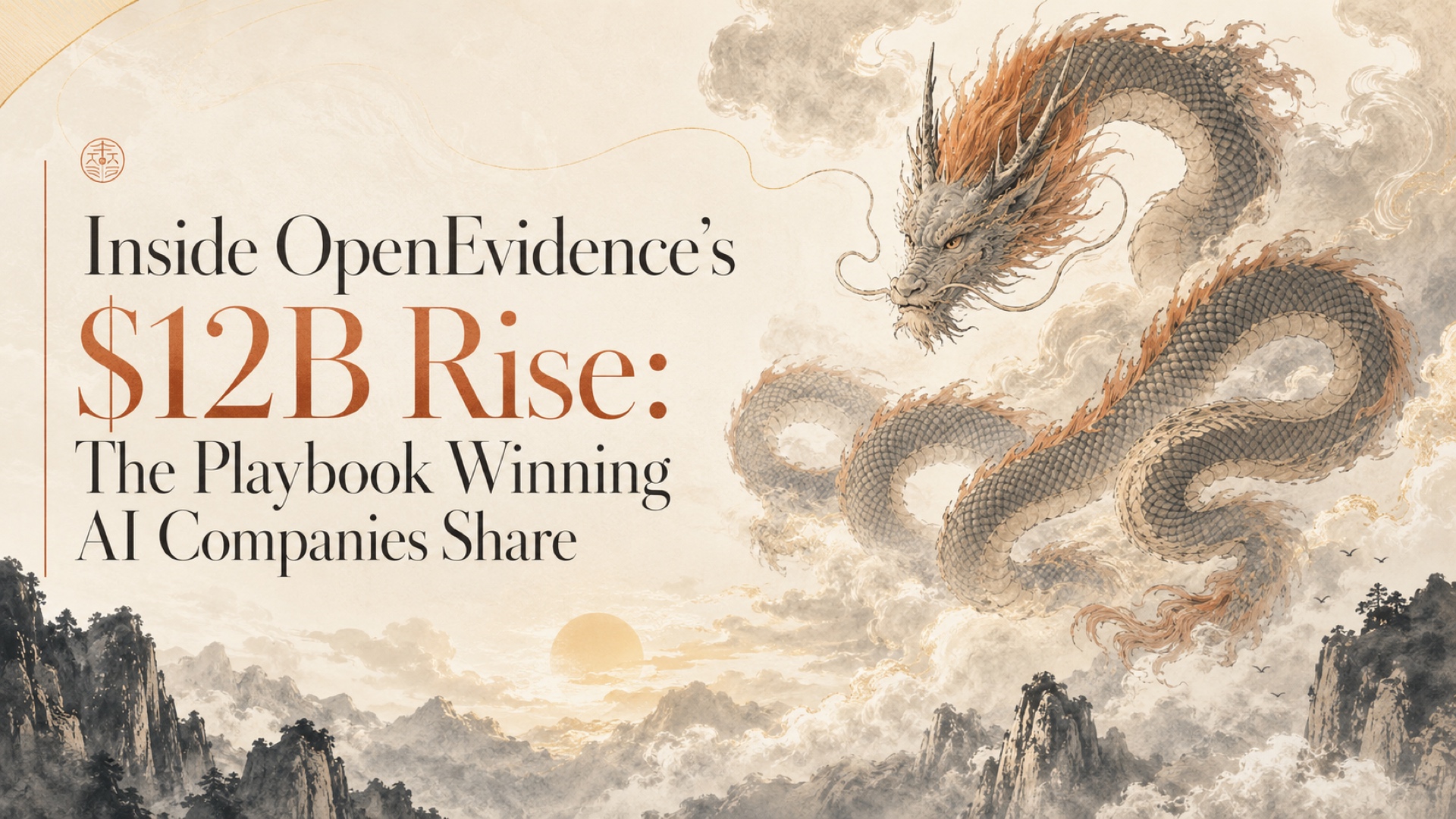
In eleven months, OpenEvidence went from a $1 billion valuation to $12 billion. By April 2026, the company reported that its platform was being used by approximately 65% of US physicians and supported nearly 27 million clinical consultations that month, with much of its adoption attributed to physician word-of-mouth.
Think explosive growth is just about having the best AI tech? It’s not. If you look at the AI companies truly scaling today, their real competitive edge is deep market insight. Too many founders skip this step because they’re rushing to build something impressive instead.
Many view AI as a dragon coming to burn down their industry. But it also represents transformative and generative power. If you cannot outmuscle a force like that, you learn to ride it to become stronger.
As AI shifts from a simple tool to an autonomous agent, completing complex work with less and less human intervention, founders face a clear choice: draw a sword, or learn to fly.
Qian and the Anatomy of a Founder
The I Ching (Book of Changes), an ancient Chinese philosophical text, uses the dragon as a central metaphor in its first hexagram, Qian (The Creative). It tracks a dragon through six stages of maturation — from total obscurity to full command of the sky. It perfectly mirrors the modern founder’s journey.
Peter Diamandis, founder of the XPRIZE Foundation, describes five mindsets that keep people stable and effective through accelerating change: curiosity, abundance, exponential thinking, longevity, and moonshot thinking. Map them onto the dragon’s ascent and you get an operating system for building through the AI era — one altitude at a time, plus a warning at the top that most founders skip.
1. Hidden Dragon — The Curiosity Mindset
“The dragon is hidden. Do not act.”
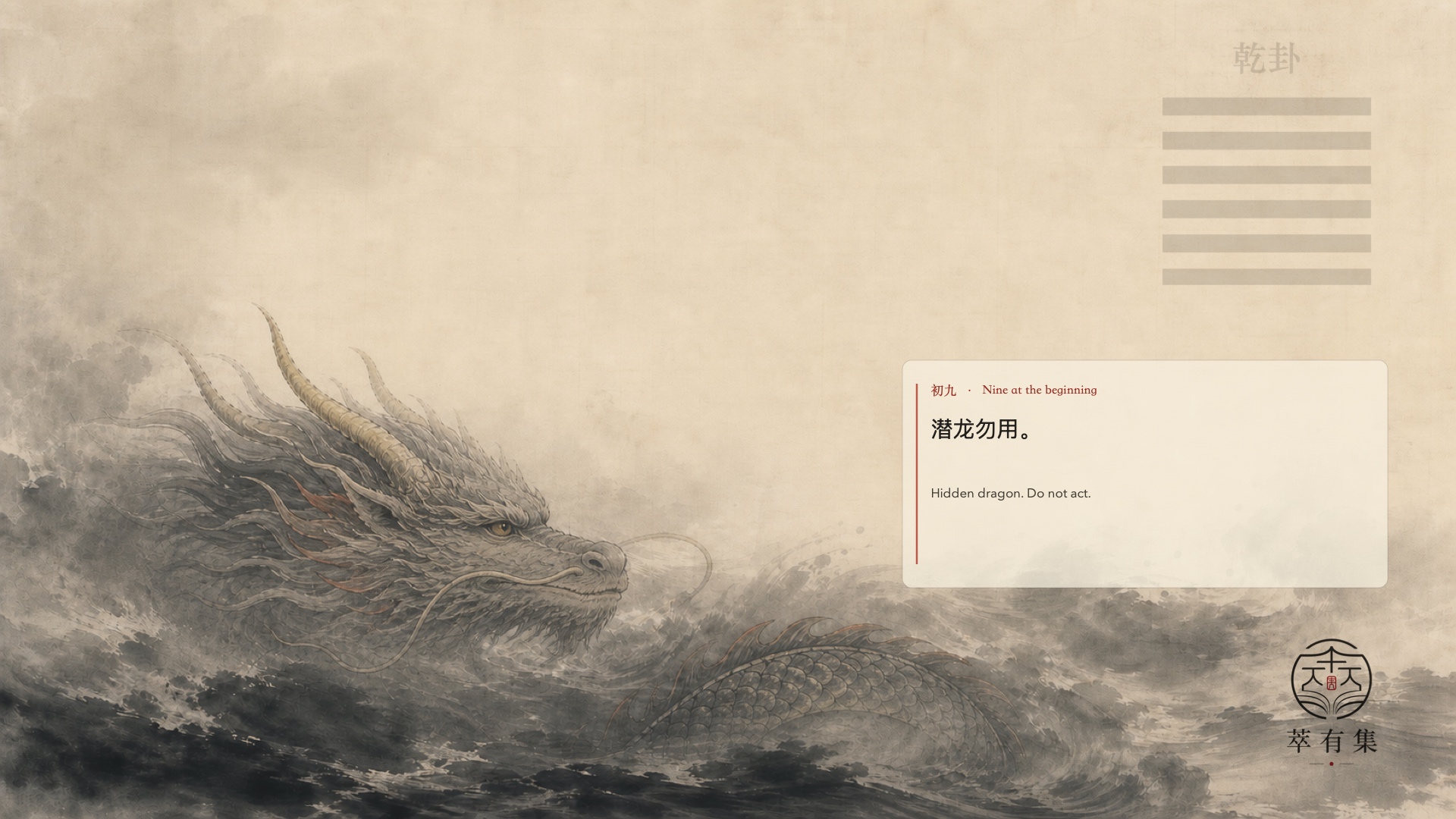
At the earliest stage, the market doesn’t know you exist, and that’s fine. This is a research phase. The Curiosity Mindset is the fuel: what specific problem does this technology actually solve, for whom, better than the current alternative? Curiosity prevents premature action and allows you to deeply understand the landscape before making your move.
2. Dragon in the Field — The Abundance Mindset
“The dragon appears in the field. It furthers one to see the great man.”
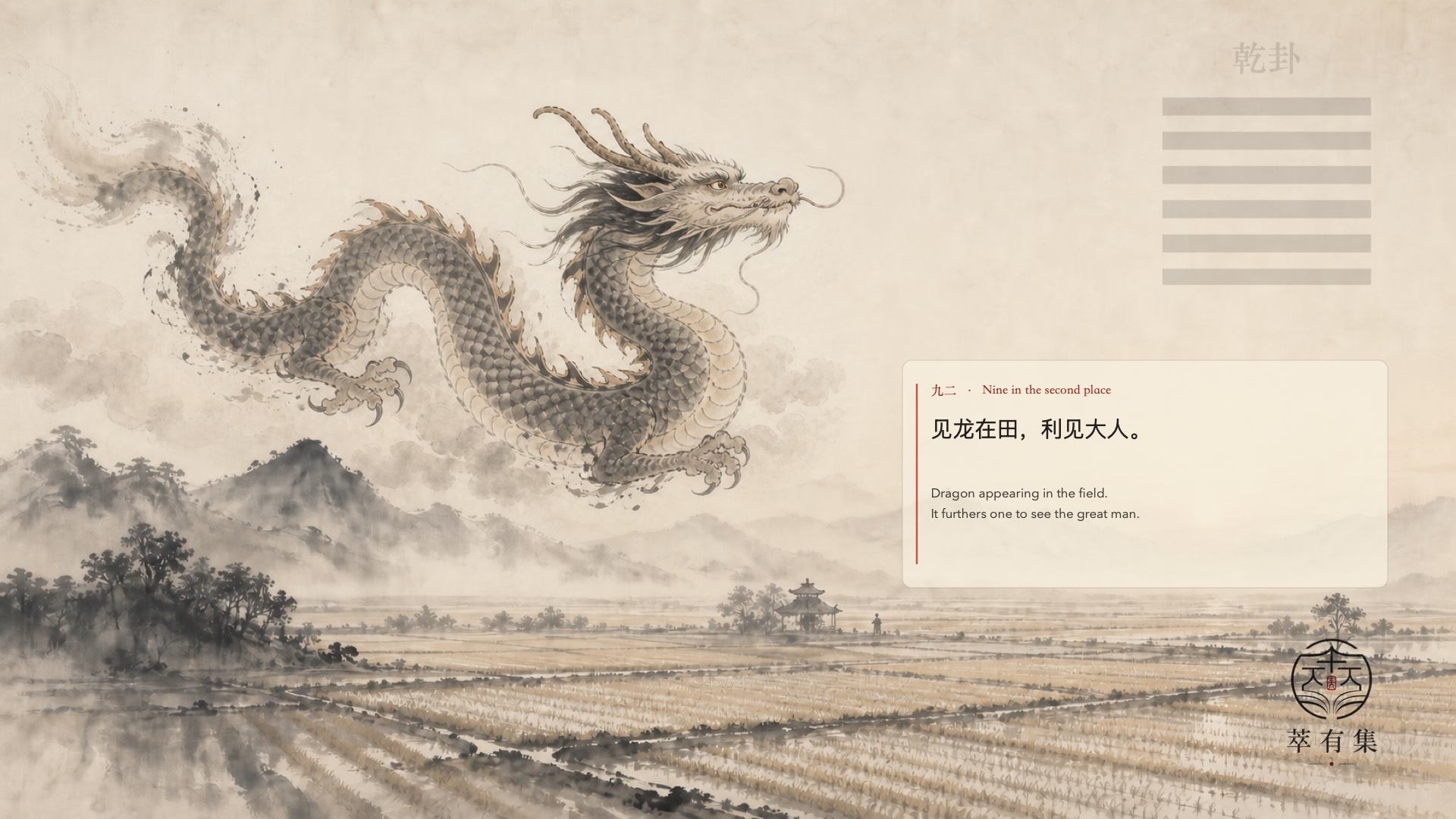
You launch, and suddenly you’re standing next to other companies with more computing power, more data, and more capital than you’ll ever have. This is where scarcity thinking kills founders, treating AI as a fixed pie that a handful of giants will win.
An abundance mindset realizes that AI is driving the cost of intelligence toward zero, baking an infinitely larger pie. You now have the tools to build things that would have required a much larger engineering team just a few years ago.
3. The Diligent Dragon — The Longevity Mindset
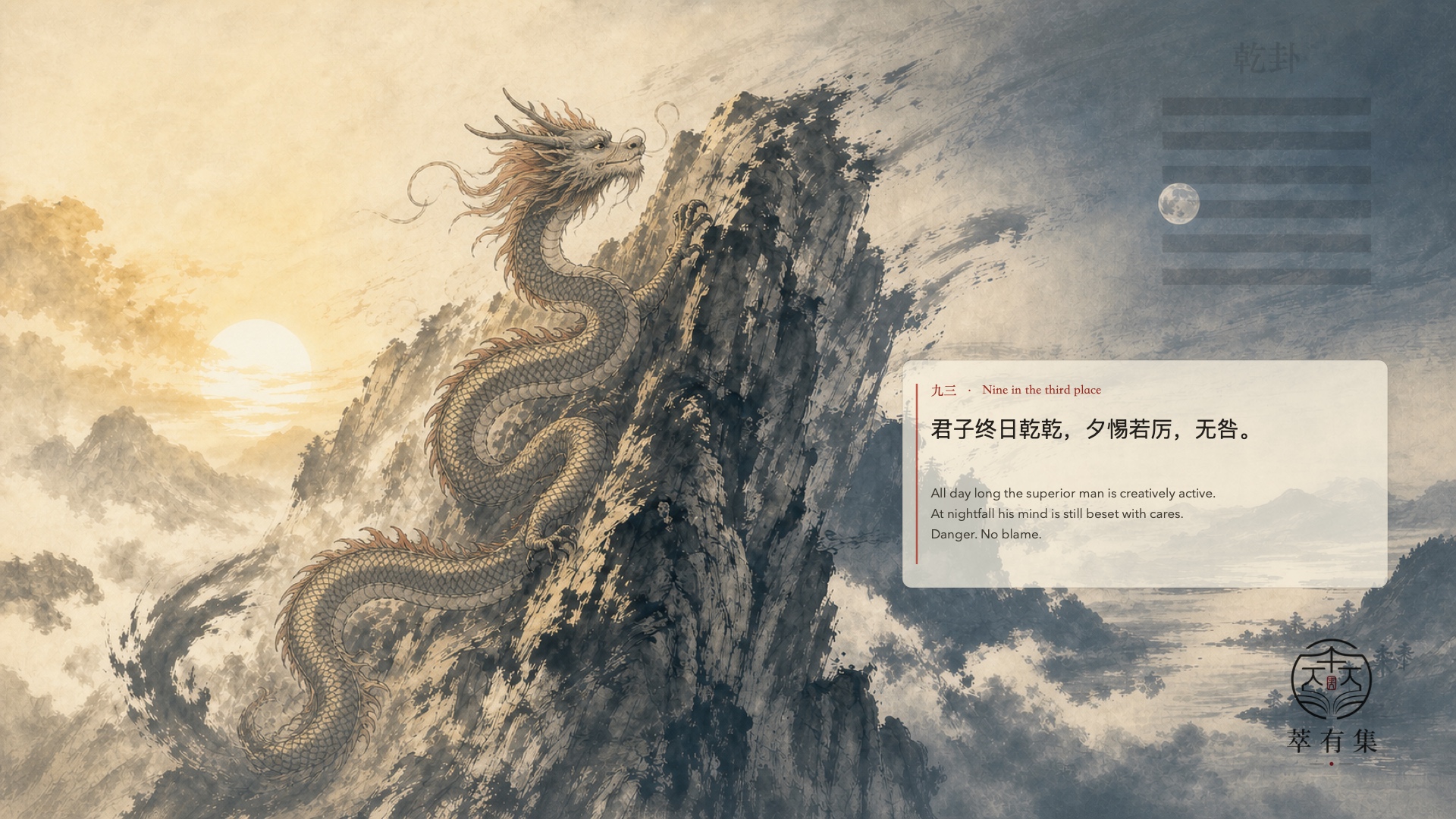
“All day long the superior man is creatively active. At nightfall his mind is still beset with cares. Danger. No blame.”
This is the grind. You have entered the market and are building furiously, but the psychological and physical pressure is immense. You are active all day, yet anxious at night. To survive this perilous phase of non-stop execution, founders must adopt the Longevity Mindset.
A Yale study led by Professor Becca Levy found that older adults with more positive views of aging lived about 7.5 years longer. For founders, the Longevity Mindset applies this same logic to the body and the organization: you cannot reach the next stage on a burned-out founder or a brittle team. Resilience works as load-bearing infrastructure for the leap itself.
4. Leaping Dragon — The Exponential Mindset
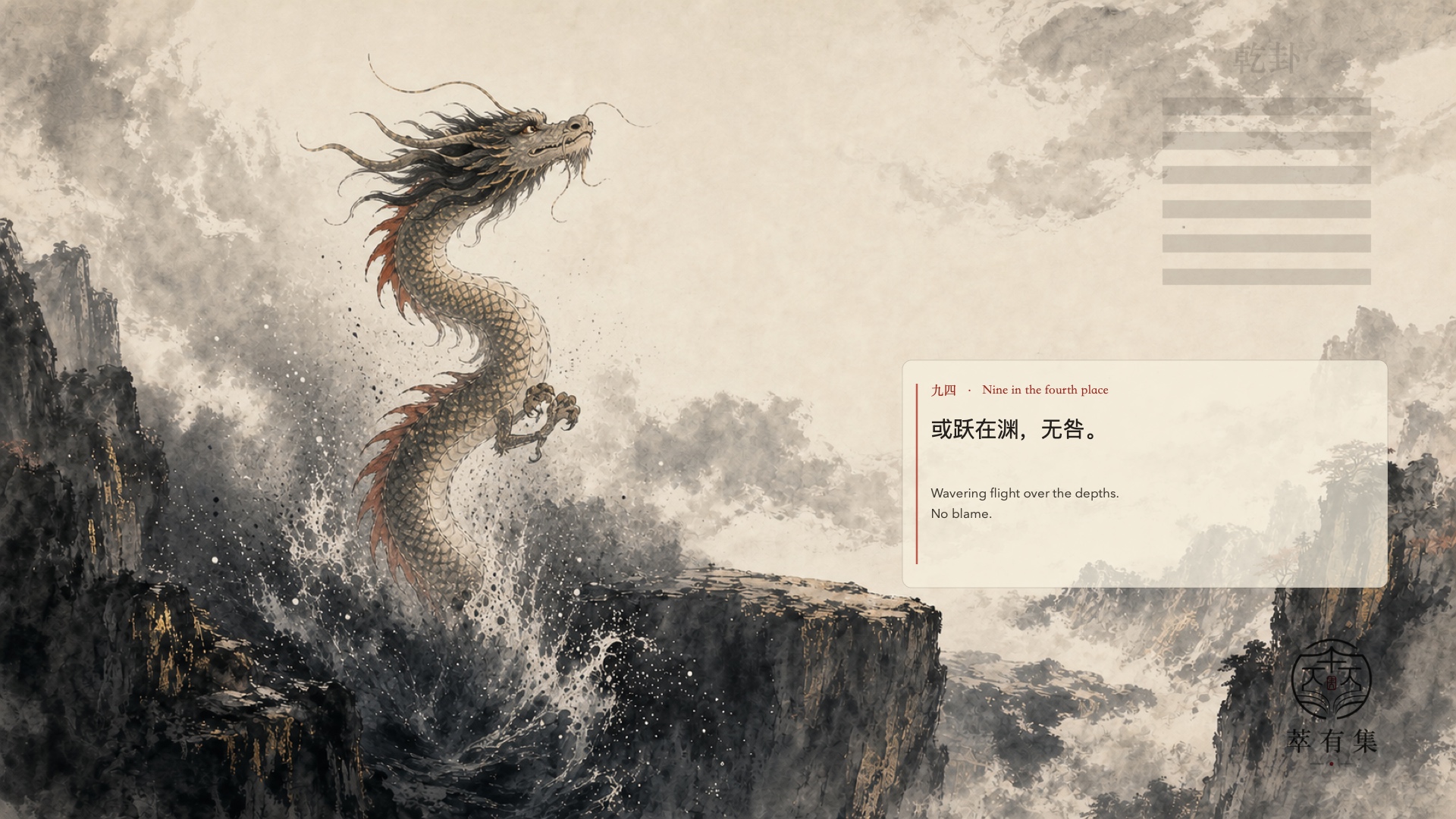
“The dragon leaps over the abyss. No blame.”
This is the scaling phase, the most dangerous part of the journey. To cross the chasm, founders must adopt the Exponential Mindset.
Human brains are wired to think linearly, but AI advances exponentially. The Exponential Mindset means architecting for where the model will be in eighteen months, not where it is on launch day.
Founders who build their product roadmap against today’s capability ceiling are already building a legacy product. You must anticipate the leap, building infrastructure that scales with the compounding intelligence of the models themselves.
5. Flying Dragon — The Moonshot Mindset and Scenario Maturity
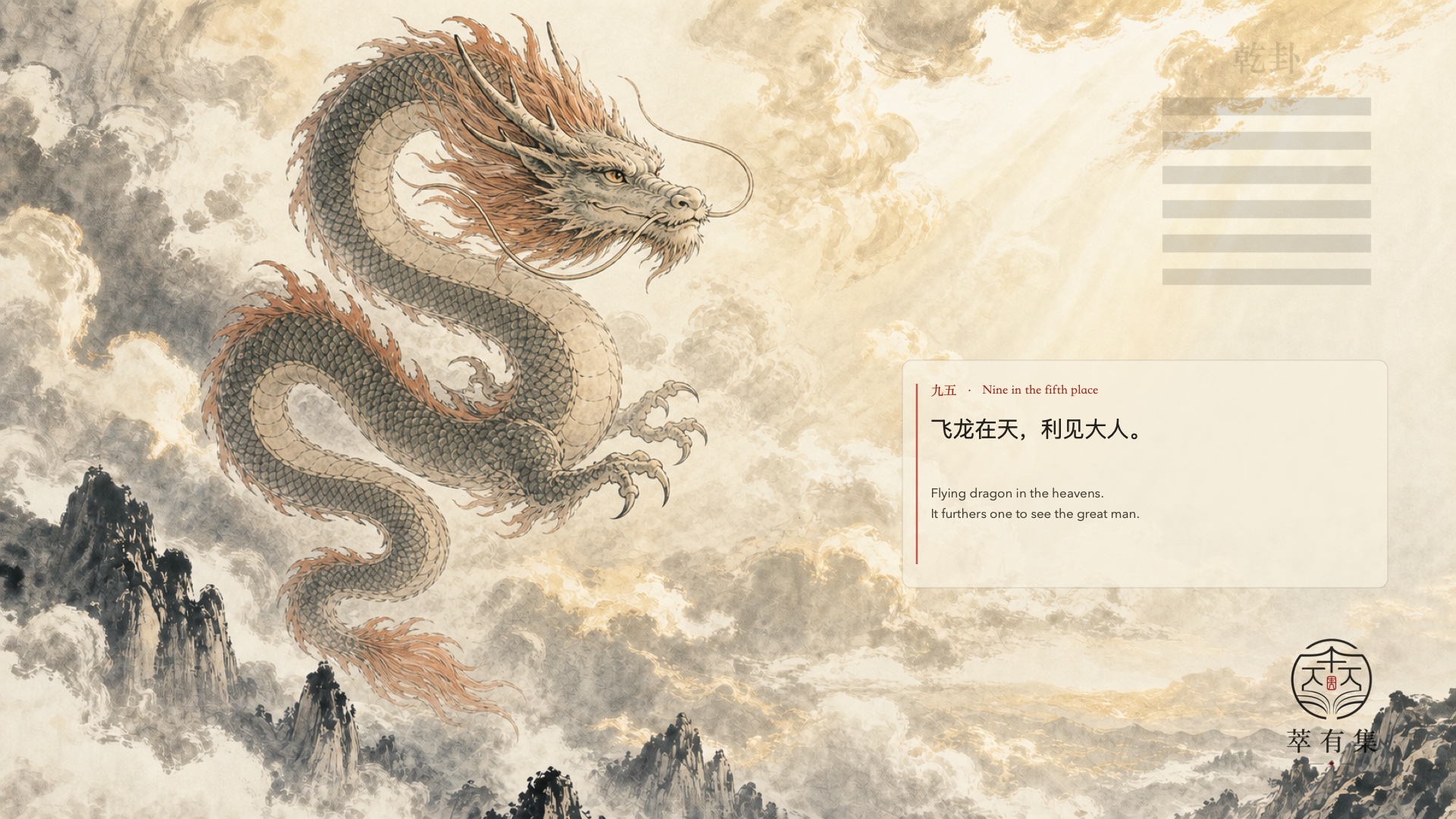
“The flying dragon is in the heavens. It furthers one to see the great man.”
The Moonshot Mindset treats “impossible” as an unsolved engineering problem rather than a wall. But a moonshot without a landing site is just a hallucination with better production values. What separates a flying dragon from an expensive fireworks show is Scenario Maturity — a check on whether the specific use case you’ve chosen, not the technology in general, is actually ready to fly.
That means asking harder questions, such as:
- Is there a real buyer, with real budget and real urgency, ready to act now rather than someday?
- Does the workflow generate a feedback loop that compounds in your favor the longer you run it?
- Can today’s models actually do the job reliably at the point of use?
Get that match right, and the moonshot has somewhere to land. Chase ambition alone, and you’ve built a very well-funded crash.
Case in Point: Open Evidence
Open Evidence is an AI-powered medical search engine and clinical decision-support platform that allows verified healthcare professionals to ask complex medical questions and receive rapid answers grounded in peer-reviewed literature. It demonstrates scenario maturity through a precise, high-stakes alignment of buyer, monetization, moat, and capability match:
- The Buyer & Monetization: Targeted physicians making time-sensitive decisions at the point of care. Instead of inventing a new budget, it tapped into existing pharmaceutical marketing dollars by keeping the tool free for verified doctors and monetizing via contextually relevant pharma advertising.
- The Moat: Built exclusively on peer-reviewed medical journals and direct content partnerships with elite institutions like the American Medical Association and the New England Journal of Medicine. The data asset is compounded by proprietary, verified clinical consultation loops that competitors cannot easily replicate.
- The Capability Match: Bounded the problem domain tightly to clinical medicine rather than attempting open-ended consumer chat, allowing current-generation models to maintain exceptional reliability.
That combination, not a superior model, is what turned a niche physician tool into the fastest-scaling case in the sector.
One Line Further: The Arrogant Dragon
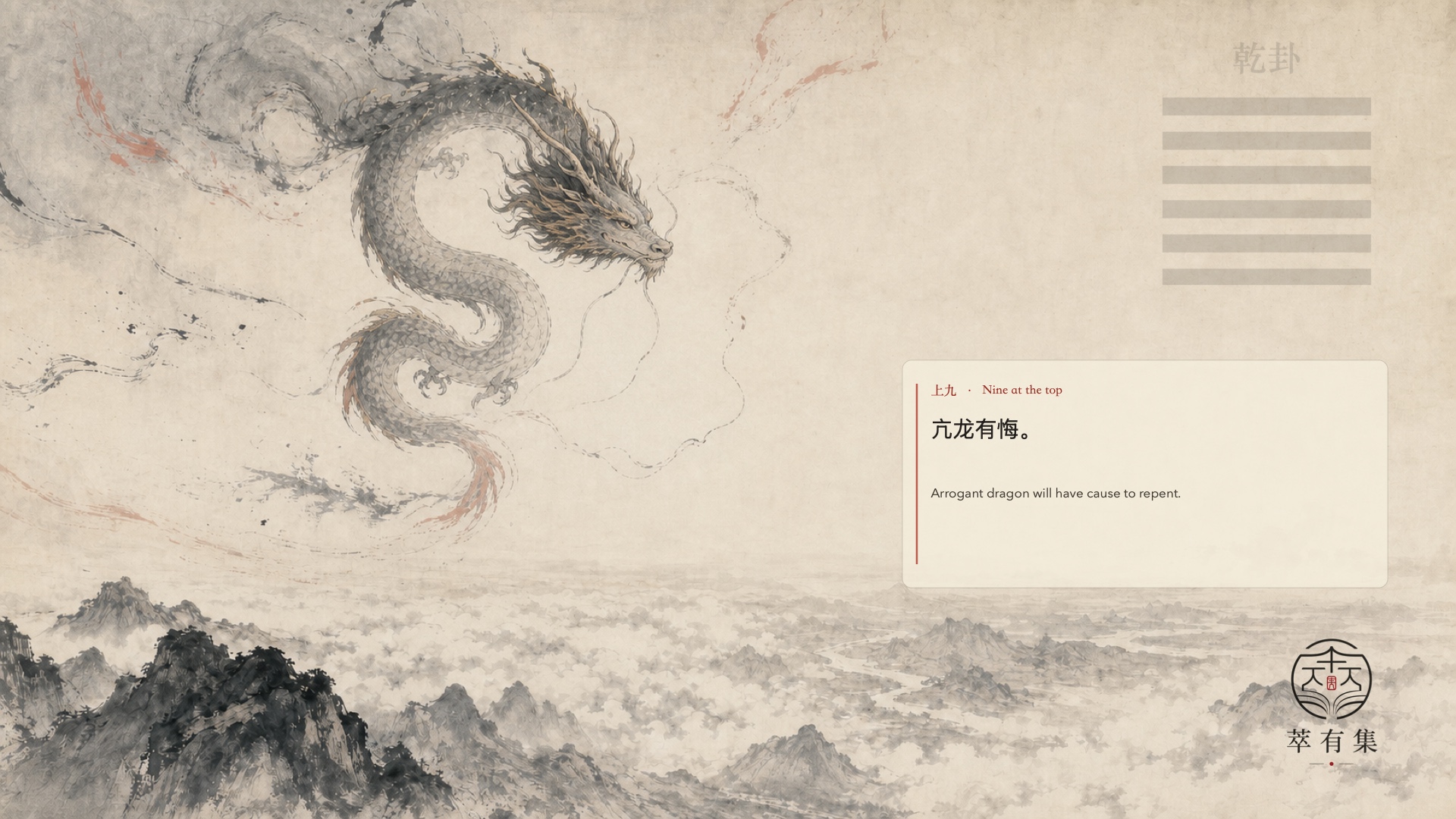
The Qian hexagram doesn’t stop at the flying dragon. Its sixth and final line describes a dragon that has flown too high — an overreaching dragon with cause for regret. It’s the founder who mistakes access to a powerful model for scenario readiness, and pours capital into the most exciting application instead of the most prepared one.
The lesson isn’t to stop climbing. It’s to keep re-checking, at every altitude, whether the business, the data, and the technology are actually ready for where ambition wants to take you.
The Human Edge: Judgment Over Data
If AI can already process the available information instantly, where does human advantage come from?
Howard Marks, co-founder of Oaktree Capital, drew this line decades before anyone was worried about AI:
- first-level thinking stops at the obvious conclusion;
- second-level thinking asks what everyone else is missing, and what happens next because of it.
AI has made first-level thinking free — any model can summarize the data, the consensus, the obvious take, instantly. That pushes the entire edge left for founders and investors up to the second level:
- Judging the second-order effects of what the data actually implies, not just what it states.
- Weighing what can’t be measured — management quality, grit, the structural maturity of a scenario.
- Deciding, on conviction, which future is worth building toward before the market has agreed with you.

AI is an incredibly powerful engine, but it lacks a soul. It lacks intent. Understanding the limitations of AI allows us to shed the victim mindset and reclaim our natural birthright as creators.
No matter how powerful the machine becomes, the human founder still evaluates the scenario and sets the destination – at least for now. We remain in charge of our lives, fully capable of shaping our own destinies.
Do not fear the dragon. Find your scenario, and ride it.