
蔡磊的最后一次创业:当旧地图失效创始人如何重构一个无解场景?

蔡磊的最后一次创业:当旧地图失效创始人如何重构一个无解场景?Mans International

导语:

《易经・乾卦》有云:“天行健,君子以自强不息。” 这份无论处于哪种际遇,都能尽己所能的底层力量,在蔡磊的实践中得到了最极致的印证。

2019 年,41 岁的蔡磊确诊渐冻症(ALS)。彼时他身为京东副总裁、中国电子发票第一人,刚迎来新生命,正处于事业与家庭的双重巅峰。而医生给出的 2-5 年平均生存期,为他按下了冰冷的人生倒计时。

蔡磊的最后一次创业:当旧地图失效创始人如何重构一个无解场景?Mans International
蔡磊的最后一次创业:当旧地图失效创始人如何重构一个无解场景?

七年后的今天,他的身体功能评分从 48 分跌至 4 分,脖颈以下完全瘫痪,声带彻底萎缩,依赖流食与 24 小时呼吸机维持生命,全身上下仅剩双眼可以自主控制。

蔡磊的故事,远不止一场关于抗争与共情的励志叙事,从产业视角出发,用 SMAF(场景成熟度评估框架)拆解便会发现:这更是一场教科书级的深科技场景破局 —— 一套完整的成熟度体系,将全球医学界公认的 “无解绝境”,重构为高成熟度、自循环的科研协作与产业转化生态。

一、SMAF 框架深度拆解:蔡磊的 “破冰之战”,为何是罕见病领域的高成熟度超级生态

在 Mans International,我们使用SMAF(场景成熟度评估框架 / Scenario Maturity Assessment Framework) 来评估深科技与跨国项目的落地潜力。我们见过太多死于“PPT造车”或“实验室自嗨”的项目。

从场景成熟度的角度看,蔡磊的“破冰”行动真正厉害的地方,不只是“相信”,而是把相信之后的每一步,把一个原本高度破碎、长期低效、缺乏足够资源关注的罕见病场景,逐步组织成了一个患者、数据、样本、科研、临床、资金、AI 与公众信任共同参与的协同系统。

1. 数据和工作流:从零散病友到研发基础设施

罕见病研发最大的难题之一,是患者分散、样本稀缺、真实世界数据不足。很多时候,科研并不是没有方向,而是缺少足够稳定、持续、可用的数据基础。

蔡磊牵头搭建的“渐愈互助之家”,是全球最大的民间渐冻症科研数据库(注册量突破18000人),收录了上万份结构化的真实世界病例。

数据和工作流:从零散病友到研发基础设施 Mans International
  • 在工作流端:这套360度动态生命指标跟踪系统,将原本极其低效的临床招募压缩到了令人惊叹的速度——实现以“小时”为单位的极速响应(2小时700人报名,3个月内开启临床)。
  • 在数据端:他启动了“渐冻症科研AI大脑”,全天候训练全网超2000万篇跨学科文献。AI 没有增加研究员的负担,而是“消失”在科研工作中,自动过滤与进化靶点。

2. 商业闭环:使命必须有长期供血机制

罕见病科研很难完全依赖短期捐赠或单点资助。药物研发周期长、失败率高、资金需求持续,而外部融资环境、公益热度和社会关注度都会波动。如果没有稳定的资金来源,再宏大的使命也很容易在中途失血。

蔡磊和段睿所形成的夫妻共患难组合,恰恰体现了愿景与运营的互补。很多人看到段睿的直播,会首先想到“妻子的牺牲”。这当然是真实的,也是令人动容的。但在商业视角下,这是极其高明的商业闭环设计。

蔡磊负责不断拉高使命天花板,连接患者、科学家、药企和社会关注;段睿则承担大量现实层面的运营压力,包括直播、团队、资金、成本、节奏和风险控制。这种“前端商业造血+后端科研烧钱”的闭环,为一个长周期、高不确定性的科研项目,提供了一种持续供血机制。

商业闭环:使命必须有长期供血机制 Mans International
商业闭环:使命必须有长期供血机制

3. 叙事:从悲情共情到产业行动共识

在蔡磊之前,渐冻症在公众与产业语境中,始终是 “无药可治、无利可图” 的悲情命题 —— 只有泛化的同情,没有明确的行动路径,属于典型的弱叙事场景。

蔡磊完成了叙事层面的本质升维:他没有停留在 “呼吁关注” 的情感表达,而是将罕见病研发拆解为可落地的产业命题,让科研界、产业界、公众都清晰看到自身的参与方式与价值。

这套成熟叙事最终穿透圈层,联动起全球 60 余个科研团队、50 余家生物科技公司,将 “无人敢碰的冷门赛道” 变成了有共识、有资源、有节奏的攻坚战场。

蔡磊在2026 年6月21日世界渐冻人日的《倒计时》演讲,更是进一步强化了全行业的攻坚共识,成为推动场景持续进化的精神内核。

二、 天行健,君子以自强不息:给中国创始人的“心力”启示

蔡磊在最新的视频《倒计时》中说:“我已经终结了一个比他更可怕的对手,名为绝望。”

他把自己比作孙悟空,“纵使不敌,也绝不屈服”。对当下正穿越周期阵痛、直面生死考验的中国创始人而言,蔡磊的“心力”是一面镜子:

第一,摒弃受害者心态。

抱怨大环境、哀叹资本寒冬毫无价值。蔡磊全身瘫痪、彻底失语,从未沉湎于命运不公,而是立刻切换战略,以眼控仪开启 “生死时速”。接受现实,倾尽所能 —— 这是创始人最底层的职业素养。

第二,在绝境中撬开增量缝隙。

蔡磊说:“你觉得前方只有一堵墙,其实未必,低头看有路,侧身有缝,甚至你可以选择翻过去、挖过去。” 当传统融资收窄、出海壁垒高筑,创始人的核心能力,就是借助 AI 杠杆、跨界生态,撬开被主流忽略的增长空间。

在绝境中撬开增量缝隙 Mans International
在绝境中撬开增量缝隙

第三,把事业锚定在更大的命题上。

“战胜恐惧最好的方法,就是把自己置于一个更大的事业当中。” 当企业愿景与硬科技突围、生命科学攻坚、能源变革等社会核心命题绑定,你获得的韧性,将远超世俗名利的支撑。

华大集团 CEO 尹烨是蔡磊科研生态的核心产业合作者:“你说要‘打光最后一颗子弹’,但这颗子弹会形成撞击,产生裂变,唤起更多的社会群体参与进来,共同解决。”

蔡磊以第一性原理与极致执行力,搭建起全球成熟度领先的 ALS 科研与数据基建。而攻克神经退行性疾病,不止关乎 50 万 ALS 患者,更关乎未来数十亿面临阿尔茨海默、帕金森威胁的全人类,这需要一支全球舰队的协同。

结语:倒计时,是胜利的序曲

蔡磊的房间里摆着四个时钟,滴答作响。

媒体说,那是他生命的倒计时。

他却说:“这是我送给渐冻症的倒计时。”

“如果眼睛看不见了,我会连上脑机接口;万一脑子转不动了,就把意识传送到具身机器人。我一路走到绝症面前,不是来向它投降的。”

天行健,君子以自强不息。

敬所有在周期谷底仍步履不停的创始人,敬所有在实验室死磕的科研人,敬所有不屈服于命运的前行者。

不必追问希望在何处 —— 向前走,希望自会显现。只要不退却,四面八方,皆是前路。

全球顶尖科研机构、跨国药企、Biotech 及国际基金:若您希望直通全球最大渐冻症科研生态与极速临床转化通道,请通过 Mans International 对接。我们以 SMAF 框架为您精准匹配患者数据、生物样本与临床招募资源,打通跨境跨界协同壁垒,加速您的管线从实验室走向临床。

SpaceX IPO and the Scenario Premium

SpaceX IPO and the Scenario Premium Mans International SMAF Sprint 2026

In Week 1 of the Mans International SMAF Sprint 2026, I revisited Insilico Medicine to stress-test the AI-drug premium. The conclusion was clear: the premium is no longer given for technical ambition; it must be earned through measurable scenario maturity.

This week, the SMAF Compass™ 2.0 moves from AI biotech to space infrastructure, frontier AI, and physical robotics.

The case is SpaceX. Through the SMAF lens, the IPO is a scenario-premium case: where investors are being asked to price several maturity layers at once.
  • Starlink is the current commercial maturity anchor.
  • Starship is the future capacity promise.
  • xAI and Grok are the AI imagination layer — but also the unresolved maturity gap.

This raises a harder question: Can mature infrastructure scenarios carry less mature AI scenarios inside the same valuation premium?

That is where the Scenario Maturity Assessment Framework, or SMAF Compass™, becomes useful.

Deconstructing the SpaceX Bundle via the SMAF Lens

A traditional IPO asks investors to value a business. The SpaceX IPO asks investors to value a system: reusable launch, Starlink, Starship, xAI, and the broader Musk narrative.

Deconstructing the SpaceX Bundle via the SMAF Lens Mans International
Deconstructing the SpaceX Bundle via the SMAF Lens

Starlink is the Anchor

  • Business Maturity: Starlink is the undisputed commercial anchor of the IPO. It has translated deep-tech capability into high-margin, recurring global revenue. From maritime communication and enterprise backup to national defense resilience, the pain point is urgent, the buyer is clear, and the value-capture path is proven. Without Starlink’s business maturity, the broader IPO valuation would be highly fragile.
  • Data Maturity: Starlink creates a compounding intelligence loop. More users and traffic generate richer network data, which improves routing, reliability, and performance. Better performance increases adoption, and greater adoption deepens the data advantage.
Starlink is the Anchor Mans International
Starlink is the Anchor

Starship is the Capacity Promise

  • Narrative Maturity: Starship nails this pillar. It gives the market a canvas for its grandest space-based imagination — lunar missions, orbital data centres, and Mars colonization. It converts staggering technical complexity into a highly memorable story of future capacity optionality.
Starship is the Capacity Promise Mans International
Starship is the Capacity Promise

However, while its Narrative Maturity is maximum, its short-term Business Maturity remains an unproven future option.

xAI is the Unresolved Layer

  • Workflow Maturity: This is the core maturity gap in the bundle. xAI and Grok inject a massive “AI imagination premium” into the valuation. Yet, serious enterprise and government users still face immense workflow friction: model differentiation, data trust, and deep operational integration.
xAI is the Unresolved Layer Mans International
xAI is the Unresolved Layer

Right now, a highly mature infrastructure scenario (Starlink) is actively carrying a far less mature workflow scenario (xAI) inside the same valuation story.

The Strategic Takeaway for Founders and VCs

Capability shock is not scenario maturity. 

A technology company becomes truly investable only when the surrounding scenario matures enough to absorb the innovation and convert it into durable, compounding value.

When evaluating your own tech stack or investment pipeline this quarter, step away from technical specs and ask the tough SMAF questions:

  1. What is your business maturity anchor? What working scenario is generating the predictable revenue needed to subsidize your future bets?
  2. Is your narrative outpacing your workflow? If your Narrative Maturity is a 10, but your Workflow Maturity is a 2, your valuation premium is dangerously fragile.

In the frontier tech era, technology maturity is merely the baseline for entry. Scenario maturity is where the premium is actually earned.

Scenario Maturity is the Premium Mans International
Scenario Maturity is the Premium

Join the Mans International SMAF Sprint 2026

This assessment is Week 2, Case Study 02 of the Mans International SMAF Sprint 2026.

If you are a tech founder, deep-tech VC, industrial leader, or cross-border strategy decision-maker navigating AI, robotics, space infrastructure, or US-China technology decoupling, do not wait for the market to expose the gap.

Your technology may be strong. Your narrative may be compelling. But if the scenario is not mature enough, adoption, revenue, and valuation will eventually break under pressure.

Let’s identify the strategic gaps before the market corrects them.

Send us a direct message to request the proprietary SMAF Compass™ Briefing.

Insilico Medicine and the AI-Drug Premium: A SMAF Stress Test

Insilico Medicine and the AI-Drug Premium: A SMAF Stress Test Mans International
Insilico Medicine and the AI-Drug Premium: A SMAF Stress Test Mans International
Insilico Medicine and the AI-Drug Premium: A SMAF Stress Test

I first analyzed Insilico Medicine in my 2023 book, when it became one of the most visible pioneers in AI-driven drug discovery.

By 2025, Insilico’s narrative moved beyond sheer R&D velocity. It had become a test of whether AI could translate biological insight into clinically meaningful, commercially viable assets in longevity and age-related disease — through tools like PreciousGPT and its lead asset, Rentosertib.

In 2026, the story became more complex.

Despite a milestone-based Eli Lilly collaboration worth up to $2.75 billion, including a $115 million upfront payment, Insilico’s public-market narrative remains under pressure after a $352.3 million net loss for 2025 and sharp volatility on the HKEX.

That is why I chose Insilico Medicine as an early case for the Mans International SMAF Sprint 2026.

Mans International SMAF Sprint 2026

For founders, the lesson is clear: In AI commercialization, technology maturity does not always coincide with business maturity, capital-market confidence, governance credibility, or narrative maturity.

This is exactly the kind of mismatch the Scenario Maturity Assessment Framework, or SMAF, is designed to examine.

1. Business and Narrative Maturity: “AI-Discovered Drug” Is No Longer Enough

Insilico’s real breakthrough was not simply using AI to discover drugs. It was translating a broad technology promise into a concrete business scenario.

“Aging” itself is not an FDA indication. To build a credible path to market, companies must convert broad healthspan ambition into specific diseases, measurable endpoints, and regulatory logic that investors, pharma partners, and clinicians can evaluate. Insilico did this by targeting IPF, or idiopathic pulmonary fibrosis.

Through an SMAF lens, this is the strategic move. The company did not stay at the level of “AI can discover drugs.” It selected a disease scenario where the technology could be tested against real-world evidence, regulatory, partnership, and business requirements. This is why Rentosertib matters.

The asset moves the conversation from AI discovery speed to a harder question:

Can an AI-enabled biotech company turn discovery into validated assets, strategic partnerships, and repeatable business value?

Business and Narrative Maturity: “AI-Discovered Drug” Is No Longer Enough Mans International
Business and Narrative Maturity: “AI-Discovered Drug” Is No Longer Enough

In the early AI wave, “AI-discovered drug” was enough to capture attention. By 2026, it will no longer be enough to sustain the premium.

Markets now want specifics: the target, the indication, the endpoint, the regulatory path, the partner logic, and the platform’s repeatability.

For founders, the lesson is clear: AI novelty may open the door. But only a mature business scenario keeps the door open.

A strong narrative does not exaggerate certainty. It shows how technological possibility becomes clinical evidence, commercial value, and investor confidence.

2. Cross-Border Maturity: Speed ≠ Trust

Insilico is especially important because it sits across different geographies, capital systems, and operating logics.

Its links to Hong Kong and China’s biotech infrastructure give it access to real advantages: engineering talent, biotech clusters, automation capacity, scientific speed, cost-efficient R&D execution, and increasingly sophisticated capital-market infrastructure.

But global commercialization requires another layer.

It requires regulatory confidence, clinical transparency, pharma trust, investor communication, data governance, and geopolitical risk management.

This is where globally operating AI biotech companies with strong Hong Kong, China, or Asia-linked R&D networks face a hidden challenge.

Cross-Border Maturity: Speed ≠ Trust Mans International
Cross-Border Maturity: Speed ≠ Trust

Speed is not enough.

To win globally, they must translate technology, evidence, governance, and narrative into a form that global stakeholders can trust.

Through an SMAF lens, this is not just an expansion strategy. It is a maturity test.

The ultimate question for cross-border founders is: “Can this company become globally legible, credible, and trusted?”

3. The SMAF Takeaway: A Conditional Premium

Did Insilico Medicine pass the SMAF test? Partially.

Insilico has passed some important parts of the SMAF test:

  • Its AI drug discovery capability appears strong.
  • Its story has moved from a broad AI-discovery promise to a more concrete disease pathway through Rentosertib and IPF.
  • The Eli Lilly collaboration strengthens external validation and commercial credibility.

But it has not yet fully passed the broader scenario maturity test.

The remaining question is not whether the technology is impressive.

It is whether the surrounding scenario is mature enough to support repeatable clinical progress, durable commercial value, capital-market confidence, and globally credible governance.

The SMAF Takeaway: A Conditional Premium Mans International
The SMAF Takeaway: A Conditional Premium

That is why the AI-drug premium is not dead. It is being repriced.

Markets will no longer reward AI capability alone. The premium must now be earned through clinical progress, pharma validation, financial discipline, and globally credible governance.

For cross-border biotechs, the real bridge is not just market access. It is the ability to translate speed into trust, science into evidence, and platform ambition into globally legible value.

This is the core question behind the Mans International SMAF Sprint 2026:

If the technology works, is the surrounding scenario mature enough to turn it into adoption, revenue, and durable strategic value?

This is the exact diagnostic we run at the Mans International SMAF Sprint 2026.

At Mans International, we use the Scenario Maturity Assessment Framework (SMAF) to help founders, investors, and strategic leaders diagnose one critical question: If the technology works, is the surrounding scenario mature enough to convert it into adoption, revenue, and durable strategic value?

Why Formation Bio Succeeds Where Most AI Health Startups Fail

Why Formation Bio Succeeds Where Most AI Health Startups Fail Mans International

Most AI health startups ask the wrong question: “What can our technology do?”

Formation Bio asked something far more valuable: “Where is value already trapped — and who has the budget to unlock it?”

That single shift explains why Formation Bio has become one of the most closely watched AI-native drug development companies. The company has reportedly raised about $615 million, reached a valuation of around $1.8 billion, and attracted investors including Sam Altman, Sequoia Capital, and Andreessen Horowitz.

But the real lesson is not that Formation Bio “uses AI.” The real lesson is that Formation Bio chose a mature commercial scenario before scaling the technology. That is what most AI health startups miss.

The Real Bottleneck Was Never Drug Discovery

For years, the dominant AI drug development story has been about discovery:

  • Find new targets
  • Generate new molecules
  • Predict biological behaviour faster than humans
Drug discovery Mans International

But Formation Bio’s founder and CEO, Ben Liu, saw a different bottleneck.

“Pharma does not lack promising molecules. It lacks a faster, cheaper, more reliable way to move drugs through clinical development.”

Clinical trials are slow, expensive, operationally complex, and filled with execution risk. TIME recently reported that Formation Bio is focused on accelerating administrative and analytical tasks related to trials. Formation Bio:

  • Buys or in-licenses “stalled” assets — drugs already discovered but shelved by big pharma due to budget cuts, strategic shifts, or portfolio pruning
  • Uses proprietary AI to “stress-test” and accelerate trials — optimizing patient recruitment, site selection, and protocol design
  • De-risks and out-licenses — creating value through speed, not novelty

That distinction matters. Formation Bio is not trying to replace pharma’s entire R&D system. It is attacking a painful, expensive bottleneck in a system already facing budget constraints, urgency, and strategic pressure.

That is Scenario Maturity Thinking.

What Is Scenario Maturity?

Scenario Maturity is the difference between a technology that looks impressive and a business that can actually convert.

A mature scenario has three pillars:

The Scenario Maturity Compass Mans International
The Scenario Maturity Compass

1. Business Maturity

  • Who actually buys?
  • Who owns the budget?
  • Why would they act now?

2. Workflow Maturity

  • Can the solution fit into real-world operations?
  • Or does it require customers to change behaviour, rebuild infrastructure, and take on new risk?

3. Data Maturity

  • Does usage create better data?
  • Does better data improve the system?
  • Does that improvement compound into a defensible advantage?

When these three pillars align, revenue has a pathway. When one breaks, even excellent technology can stall.

This is why I often tell founders: technology does not generate revenue on its own. Scenario maturity creates the conditions for revenue.

Clear Buyer Convergence: Who Actually Pays?

Many AI health startups fail because they build for users rather than buyers.

They build for clinicians, patients, researchers, or health platforms — but cannot answer the most important commercial question: Who signs the purchase order?

Clear Buyer Convergence: Who Actually Pays? Mans International

Formation Bio identified their buyer early: Pharma business development & clinical operations teams at companies like Sanofi and Eli Lilly.

  • Have multi-billion dollar R&D budgets
  • Face intense pressure to improve time-to-market
  • Already understand the value of de-risked late-stage assets

This buyer convergence creates:

  • Shorter sales cycles (no market education needed)
  • Higher contract values (ROI is quantifiable: months saved = millions earned)
  • Strategic partnership opportunities (not just vendor relationships)

Workflow Maturity: AI Embedded Into the Real Job

One of the biggest mistakes AI startups make is selling AI as a product.

Formation Bio avoids this trap. In partnership with OpenAI and Sanofi, Formation Bio launched Muse, an AI tool designed to analyze scientific literature and generate tailored patient recruitment materials, cutting recruitment timelines from months to minutes.

Workflow Maturity: AI Embedded Into the Real Job Mans International

Muse is embedded into Formation Bio’s trial acceleration workflow. Customers don’t buy “AI correlation.” They buy:

  • Faster patient enrollment → shorter trials → earlier revenue
  • Lower trial costs → higher margin on out-licensed assets
  • Reduced execution risk → more predictable ROI

This is the key lesson for founders: AI becomes valuable when it disappears into the workflow and improves the business outcome.

If your customer has to stop, learn, reconfigure, and take on extra operational risk to use your product, your scenario maturity is low.

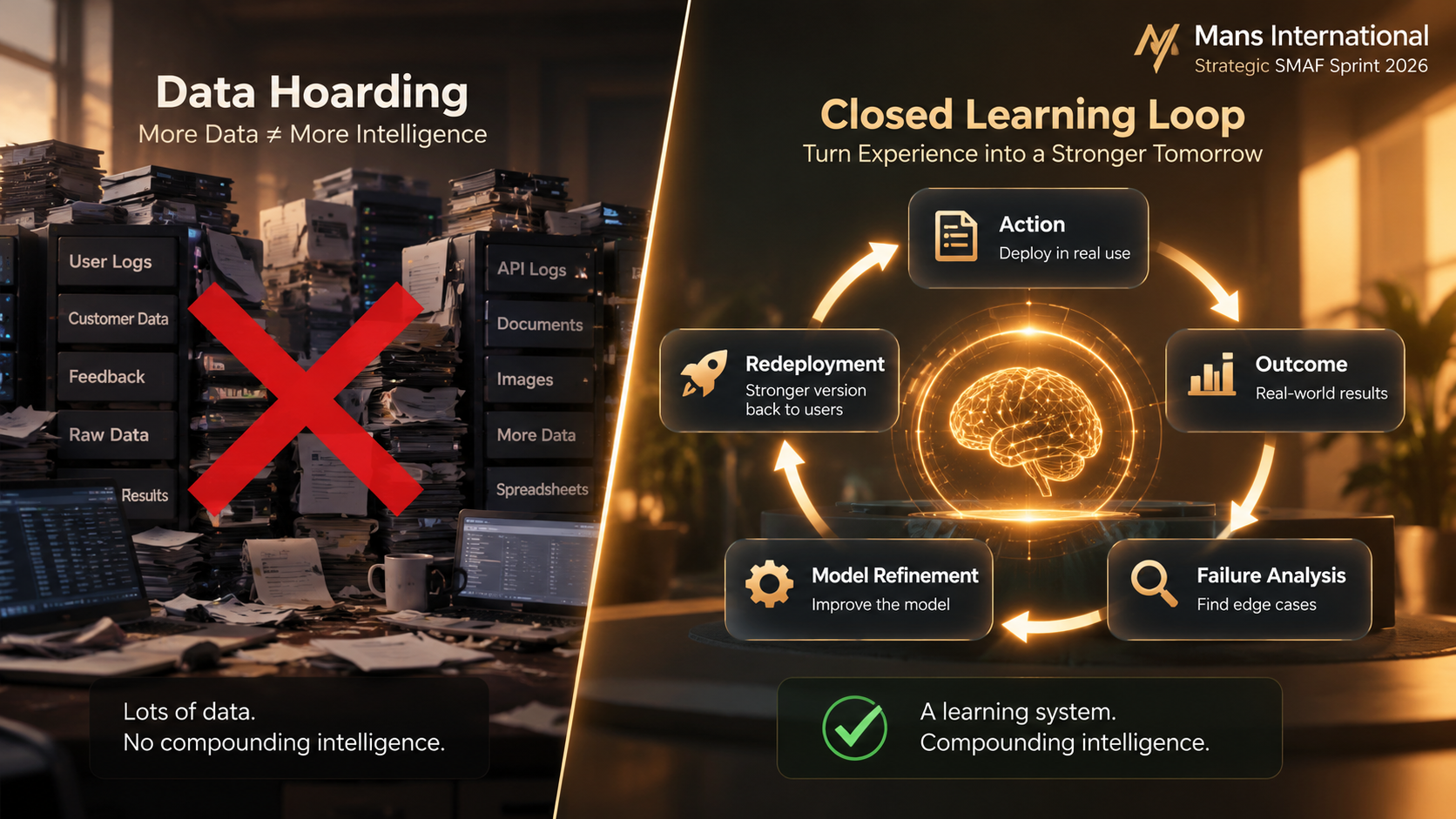
Data Maturity: The Closed Loop Most Startups Never Build

Most AI health startups face a “cold start” problem:

  • Data is fragmented across EHRs, wearables, and trials
  • Feedback loops are weak or non-existent
  • Model improvements don’t compound into business value
Data Maturity: The Closed Loop Most Startups Never Build Mans International

Formation Bio engineered a closed data loop:

Clinical trial execution → Real-world trial data → AI model iteration → Faster, cheaper next trial → Higher asset valuation

This creates:

  • Compounding advantage: Each trial makes the platform smarter
  • Defensible moat: Proprietary trial execution data can’t be scraped or replicated
  • Investor confidence: Clear path to margin expansion as the platform scales

This isn’t just a biotech story. It’s a scenario selection story — and it applies to every complex market.

The Kintsugi Contrast

This is why the contrast between Kintsugi and Formation Bio is so important.

Kintsugi VS Formation Bio Mans International

Kintsugi had impressive technology: AI-based voice biomarkers for detecting depression. It had a compelling mission, clinical signal, and strong investor interest.

But the commercial scenario was much harder.

Who pays?

  • Hospitals?
  • Employers?
  • Health plans?
  • Digital health platforms?
  • Clinics?

Each buyer had different incentives, budgets, workflows, and risk concerns.

That created a scenario maturity gap.

Formation Bio, by contrast, chose a clearer buyer, a known pain point, a measurable ROI, and a workflow where AI could improve execution without requiring the whole market to change first.

That is the difference between promising technology and investable momentum.

Why This Matters for Every Tech Founder

Formation Bio’s lesson is universal: Success isn’t about better tech — it’s about smarter scenario selection.

Before you scale, ask:

  • Budget vs. Buzz: Is there an existing procurement line for your solution — or just interest?
  • Fit vs. Friction: Does your product plug into existing workflows, or require behaviour change?
  • Leverage vs. Labour: Does every customer make your system stronger — or add custom work?
  • Causation vs. Correlation: Can your buyer measure ROI in cost savings, revenue gains, or risk reduction?

If your technology is strong but revenue is slow, the problem may not be the product.

It may be your scenario maturity.

Formation Bio's universal lesson Mans International

At Mans International, this is exactly what we help founders diagnose: where your product is getting stuck, why the market is not converting, and what must change before investors, customers, or strategic partners are ready to move.

Our expertise lies in Scenario Maturity Thinking — helping founders assess whether their technology is entering a market where the buyer, budget, urgency, data, and value-capture logic are mature enough to support real commercialization.

Because in today’s market, the winners are not always the companies with the most impressive technology.

They are the companies that know exactly where value is trapped, who has the incentive to unlock it, and how to convert that insight into revenue, partnership, and scale.