SpaceX 2.2万亿估值背后:马斯克的“成熟度捆绑”阳谋,与中国硬科技的“两条生死线”

SpaceX 2.2万亿估值背后马斯克成熟度捆绑阳谋与中国硬科技生死线 Mans International
SpaceX 2.2万亿估值背后:马斯克的“成熟度捆绑”阳谋,与中国硬科技的“两条生死线” Mans International
SpaceX 2.2万亿估值背后:马斯克的“成熟度捆绑”阳谋,与中国硬科技的“两条生死线”

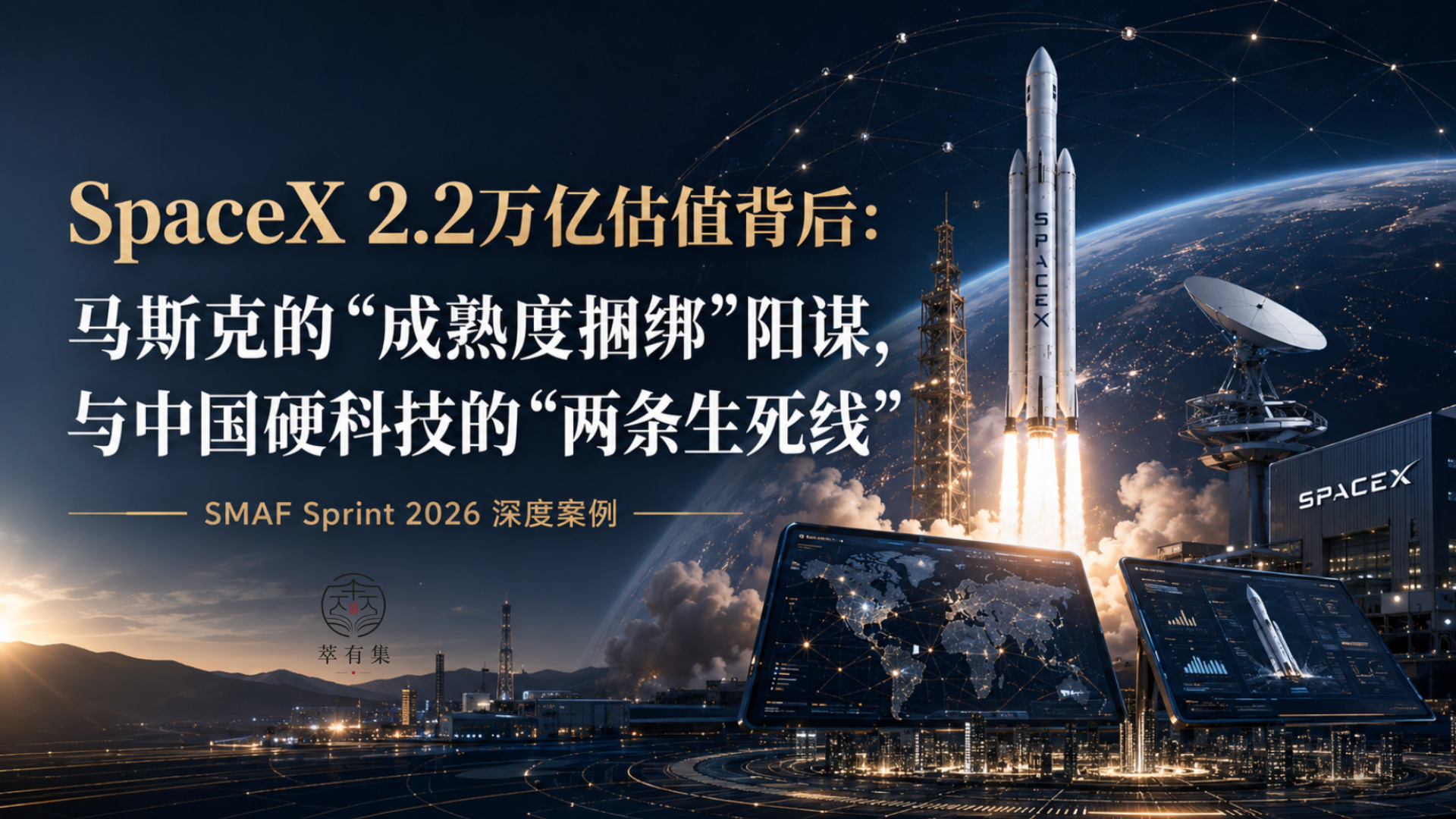
6 月 12 日,SpaceX(代码:SPCX)登陆纳斯达克,IPO 定价每股 135 美元,募资约 750 亿美元,发行估值约 1.77 万亿美元,上市后市值一度突破 2.2 万亿美元,刷新了全球 IPO 规模纪录。

朋友圈里,有人惊叹马斯克的资本手腕,有人焦虑普通投资者被收割,有人讨论这是对 OpenAI 的 “降维打击”。

但作为科技创始人、硬科技投资人,如果你只看到这些,你就错过了这场万亿盛宴背后最核心的商业逻辑。

今天,我们不谈散户情绪,不谈资本八卦。我们用 Mans International 独家的SMAF(场景成熟度评估框架),拆解一个所有硬科技创业者都必须搞懂的问题:

马斯克是如何把三个成熟度天差地别的业务,打包成一个全球资本疯抢的万亿故事?

这对正在苦苦内卷、准备下一轮融资的中国硬科技创始人来说,到底意味着什么?

SpaceX 不是一家公司,而是一个精心设计的 “成熟度捆绑包”

传统IPO的逻辑里,投资人拿的是放大镜,评估的是“一家公司”的单品业务成熟度。

但在SpaceX的局里,投资人被要求评估的,是一个庞大的生态系统:可回收火箭、星链、星舰、xAI,以及更宏大的“火星殖民”叙事。

通过 SMAF Compass™ 2.0 的视角,我们发现了一个反直觉的真相:SpaceX 根本不是一个线性发展的商业体,而是一捆“成熟度极不均衡”的业务切片。

SpaceX 成熟度捆绑包 Mans International
SpaceX 成熟度捆绑包

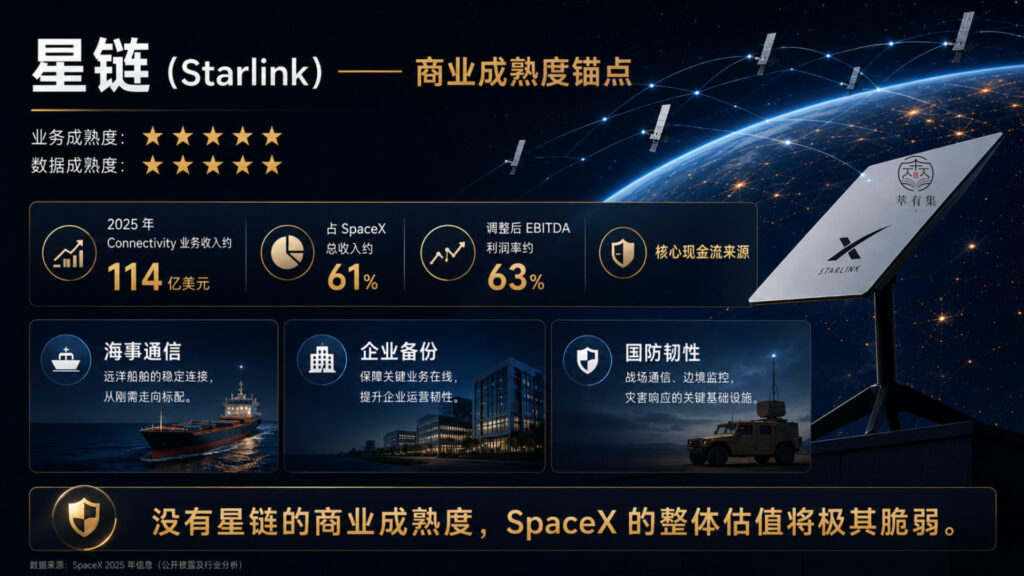
第一层:星链(Starlink)—— 商业成熟度锚点

业务成熟度:★★★★★

数据成熟度:★★★★★

星链是 SpaceX IPO 无可争议的商业底座。2025 年,Starlink 所在的 Connectivity 业务收入约 114 亿美元,占 SpaceX 总收入约 61%;该业务调整后 EBITDA 利润率约 63%,成为支撑 SpaceX 未来叙事的核心现金流来源。

从海事通信、企业备份到国防韧性,痛点足够痛,买家足够清晰,价值捕获路径已被验证。

没有星链的商业成熟度,SpaceX 的整体估值将极其脆弱。
星链(Starlink)—— 商业成熟度锚点 Mans International
星链(Starlink)—— 商业成熟度锚点

更关键的是,星链创造了数据复利循环:更多用户→更丰富的网络数据→更智能的路由算法→更好的服务体验→更高的用户付费意愿→更深的数据壁垒。

这就是 SMAF 框架中 “数据成熟度” 的终极形态:技术优势通过数据闭环自我强化,最终变成竞争对手无法逾越的护城河。

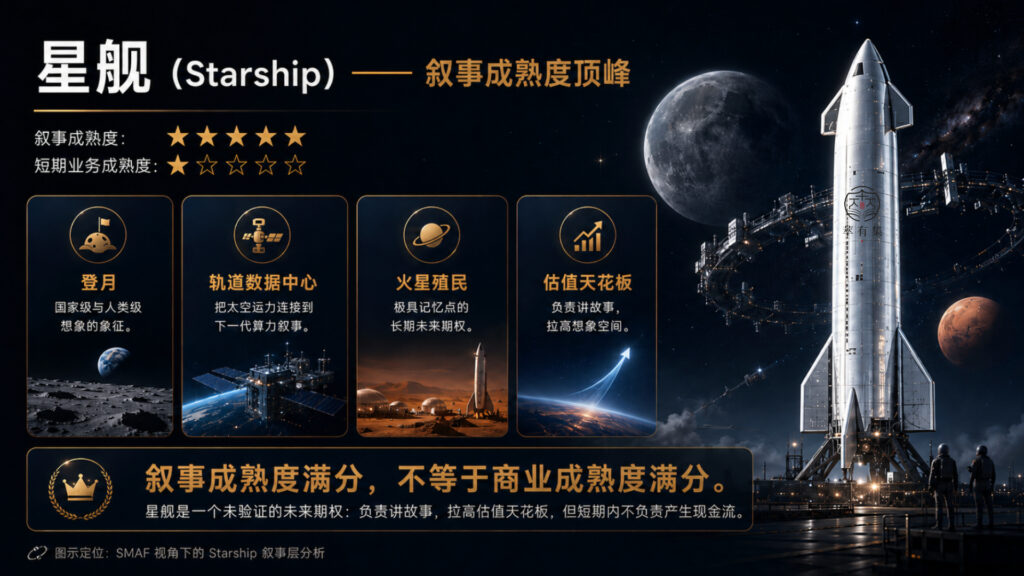
第二层:星舰(Starship)—— 叙事成熟度顶峰

叙事成熟度:★★★★★

短期业务成熟度:★☆☆☆☆

星舰承载了人类最宏大的太空想象:登月、轨道数据中心、火星殖民。

它把极度复杂的技术,转化成了一张极具记忆点的“未来期权”。
星舰(Starship)—— 叙事成熟度顶峰 Mans International
星舰(Starship)—— 叙事成熟度顶峰

但注意:叙事成熟度满分,不等于商业成熟度满分。

星舰在短期内仍然是一个”未验证的未来期权”。它负责讲故事,拉高估值天花板,但它短期内不负责产生现金流。

第三层:xAI & Grok —— 未解决的工作流成熟度缺口

工作流成熟度:★★☆☆☆

这是 SpaceX 捆绑包里最脆弱的缺口。

xAI 和 Grok 给估值注入了巨大的”AI 想象力溢价”。但对于企业和政府用户来说,模型差异化模糊、数据信任未决、深度运营集成极度困难。

xAI & Grok —— 未解决的工作流成熟度缺口 Mans International
xAI & Grok —— 未解决的工作流成熟度缺口

看懂了吗?马斯克的阳谋就是:用一个高度成熟的基建场景(星链),去主动承担一个远未成熟的AI工作流场景(xAI),用 SpaceX 的估值为 xAI 的未来定价。

东方路径的“双轨战”:宇树的“成本休克”与智元的“高叙事赌注”

当马斯克用 SpaceX 把“基建+AI”打包成一个宏大的资本叙事时,中国的硬科技创业者在具身智能(Embodied AI)赛道上,正在书写两种完全不同的“成熟度破局”打法。

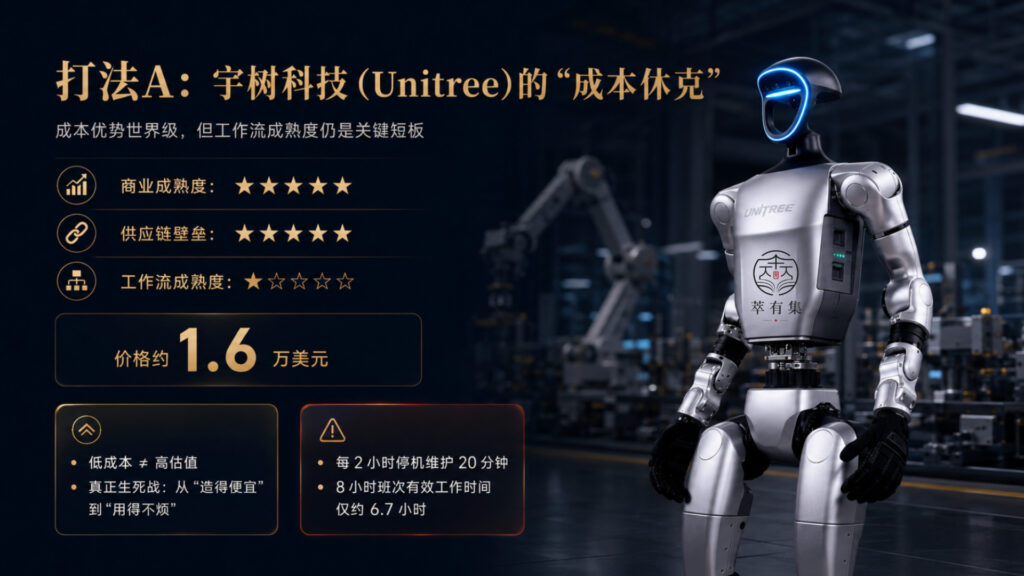
打法 A:宇树科技(Unitree)的“成本休克”

依托中国成熟的新能源车供应链,宇树把人形机器人的价格打到了约1.6万美元。在SMAF 框架的“商业成熟度”和“供应链壁垒”上,这已经是世界级。

但 SMAF 给国内狂热的硬件圈提了个醒:成本优势 ≠ 估值优势

宇树科技(Unitree)的“成本休克” Mans International
宇树科技(Unitree)的“成本休克”

一台需要每 2 小时停机维护 20 分钟的机器人,在标准 8 小时班次里,单日有效工作时间只有 6.7 小时。其综合产量和交付稳定性,还不如一个普通的人类熟练工。对 B端客户眼里的“工作流成熟度”就是不及格的,这根本不是生产力工具,而是需要额外配备一个高薪“保姆”的昂贵玩具。

中国硬件公司已经解决了“造得便宜”的问题,下一阶段的生死战,是谁能率先解决“用得不烦”的场景成熟度问题。

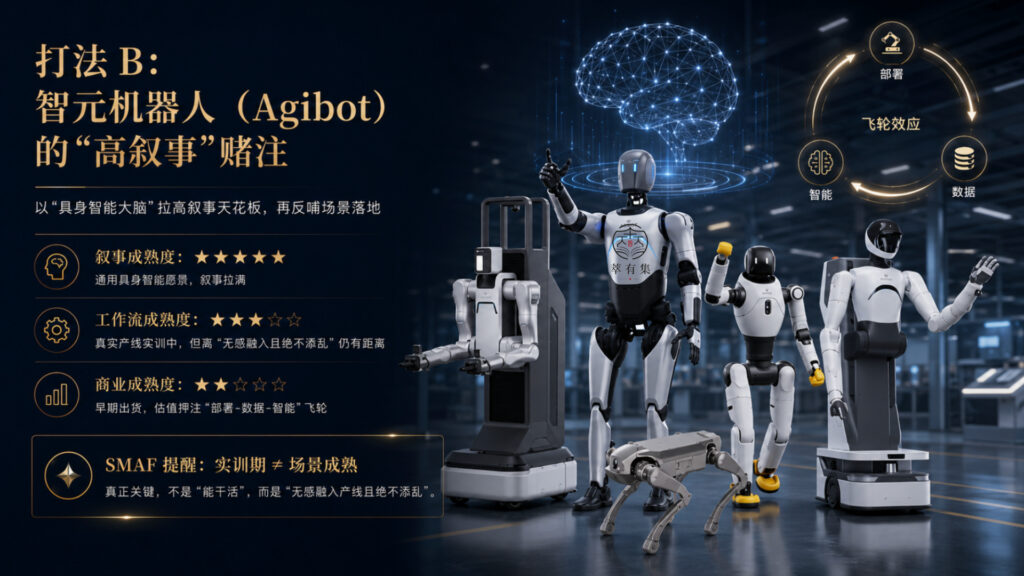
打法 B:智元机器人(Agibot)的“高叙事”赌注

与宇树的“成本休克”不同,智元选择了一条更接近 SpaceX “成熟度捆绑”的路径:用“具身智能大脑”拉高叙事天花板,再反哺场景落地。在 SMAF 框架下,其成熟度画像与宇树形成鲜明反差:

  • 叙事成熟度:★★★★★

自带顶尖技术势能,“通用具身智能”的愿景直接对标物理 AI 最前沿,叙事拉满。

  • 工作流成熟度:★★★☆☆(迭代中)

智元直接将机器人送入汽车总装等真实产线“实训”。但 SMAF 提醒:实训期≠场景成熟。从“能干活”到“无感融入产线且绝不添乱”,仍需跨越巨大的隐性摩擦力。

  • 商业成熟度:★★☆☆☆(预期驱动)

出货量尚处早期,但投资人押注的是其“部署-数据-智能”的数据复利飞轮,这与星链的估值逻辑如出一辙。

SMAF 战略警示:叙事天花板越高,场景验证压力越大。
智元机器人(Agibot)的“高叙事”赌注 Mans International
智元机器人(Agibot)的“高叙事”赌注

中国机器人双雄正在书写两种截然不同的答卷:宇树从成本端倒逼场景,智元从智能端切入场景。

在这个赛道上,宇树只需向客户证明“我足够便宜,且不添乱”;而智元则必须证明“我能比工人更聪明”。

在这场战役中,谁能率先跨越“工作流成熟度”的生死线,谁就能死死锁定下一轮的估值定价权。

灵魂拷问:你的技术,正卡在哪一层?

技术突破≠场景成熟

能力休克≠估值溢价


只有被场景吸收、能产生复利价值的技术,才真正具备投资价值。

做融资 PPT 前,先抛开技术参数,用 SMAF 场景成熟度框架问自己三个灵魂问题:

问题 1:你的 “现金牛” 在哪里?

哪个已跑通的场景,在产生稳定现金流,为你的未来研发输血?

马斯克:星链 | 你:?

没有现金牛,所有叙事都是空中楼阁 —— 这是投资人第一个会问的问题。

问题 2:你的叙事是否跑在了工作流前面?

叙事 10 分、落地 2 分的估值,一碰就碎。

牛市愿意为想象力付溢价,熊市最先压缩的,往往是“有故事、没落地”的公司。

xAI 有星链托底,你有吗?

问题 3:你的成本优势,是否转化为了场景 ROI?

便宜但不可靠,强大但难集成,都不是生产力优势,而是尚未被场景吸收的技术想象。


对于进入商业化阶段的硬科技公司,投资人不再只看你卖得多便宜,而是看你能否为客户持续创造可验证的 ROI:赚多少钱、省多少钱、降低多少运营风险。

技术成熟度,只是硬科技的入场券。场景成熟度,才是创始人拉开差距、拿超额估值的核心。

场景成熟度分层管理 萃有集
场景成熟度分层管理

SpaceX 的万亿市值,靠的不是最强的火箭,而是极致的成熟度分层:

  • 星链:赚钱(商业锚点)
  • 星舰:讲故事(叙事天花板)
  • xAI:磨未来(工作流缺口)
  • 打包:讲一个可信的增长故事


中国创始人要学的不是马斯克的疯狂,而是这套清醒的分层管理艺术。

你的公司,现在处于哪一层?

加入 Mans International SMAF Sprint 2026

本文是 Mans International SMAF Sprint 2026 的第 2 周深度案例研究:Case Study 02|SpaceX 与成熟度捆绑逻辑。

不要等到市场下行周期,才被迫暴露你的成熟度缺口。

你的技术可能很强,叙事可能很有吸引力,但如果场景尚未成熟,采用率、收入质量和估值支撑,最终都会在压力测试中显露裂缝。

如果你是科技创始人、深科技 VC、产业领袖,或正在面对 AI、机器人、空间基础设施、中美科技脱钩等复杂变量的跨境战略决策者——现在最重要的,不是继续讲更大的故事,而是在市场修正之前,提前识别你的关键战略缺口。
Mans International SMAF Sprint 2026

在 Mans International,我们用 SMAF Compass™ 场景成熟度框架 帮助你判断:

  • 你的技术场景是否已经准备好规模化
  • 真正的成熟度缺口藏在哪里
  • 如何设计自己的“成熟度捆绑包”,支撑更可信的增长叙事与估值溢价

发送私信获取《SMAF Compass™ 闭门诊断简报》。
AI Hallucination Survival Guide: Case Studies, Causes, and Prevention Strategies

AI Hallucination Survival Guide: Case Studies, Causes, and Prevention Strategies

Have You Ever Been “Fooled” by AI?
 — The $5,000 Lesson from a Lawyer

Let’s start with a real case: Steven A. Schwartz, a veteran lawyer with over 30 years of experience, was fined $5,000 for submitting AI-generated false information in court.

In 2023, Schwartz represented Roberto Mata in a lawsuit against Avianca Airlines. Mata claimed he injured his knee after being struck by a metal food cart during a flight. Schwartz used ChatGPT for legal research to support his case and cited multiple “court cases” in his legal brief. However, the judge soon discovered that these cases didn’t exist in any legal database.


Schwartz later recalled that he specifically asked ChatGPT whether the cases were real, and the AI confidently assured him they were. 

Unfortunately, he was misled by AI hallucinations.

Today, let’s talk about AI hallucinations — why AI sometimes makes things up and how to avoid being misled by it.

What Is AI Hallucination?

AI Hallucination is when the content generated by a large language model like ChatGPT looks reasonable but is completely fictitious, inaccurate, or even misleading.

For example:

You ask AI: “Who invented time travel?” 

AI responds: “Dr. John Spacetime invented time travel in 1892 and was awarded the Nobel Prize in Physics for his discovery.”

Sounds fascinating, right? But there’s a problem — it’s completely false! Dr. John Spacetime doesn’t exist, time travel hasn’t been invented, and the Nobel Prize wasn’t even established until 1901.

How Does AI Hallucination Happen?

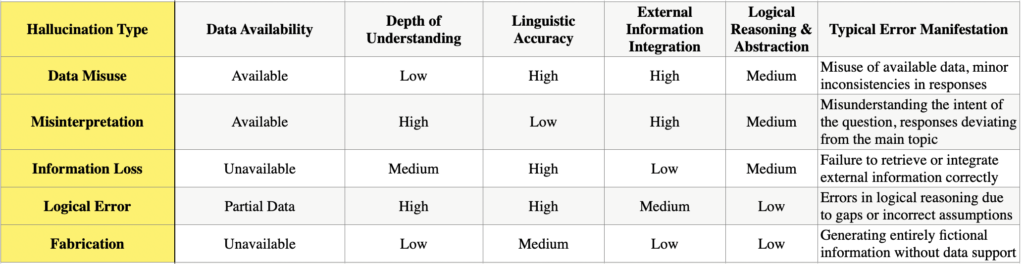
According to a research team led by Professor Shen Yang at Tsinghua University, AI hallucinations mainly stem from five key issues:

1. Data Availability Issues — AI relies on training data that may be incomplete, outdated, or biased.

2. Limited Depth of Understanding — AI struggles with complex questions and often makes assumptions.

3. Inaccurate Context Interpretation — AI may misinterpret the context of a query, leading to misleading responses.

4. Weak External Information Integration — AI cannot access or verify real-time external information and depends solely on existing data.

5. Limited Logical Reasoning & Abstraction — AI often makes logical reasoning and abstract thinking errors, especially for complex tasks.

Image source: Types of AI hallucinations summarized by Professor Shen Yang’s team.

Types of AI Hallucinations


Based on these factors, AI hallucinations can be categorized into five main types:

1. Data Misuse — AI misinterprets or incorrectly applies data, resulting in inaccurate outputs.

2. Context Misunderstanding — AI fails to grasp the background or context of a query, leading to irrelevant or misleading answers.

3. Information Fabrication — AI fills gaps with made-up content when lacking necessary data.

4. Reasoning Errors — AI makes logical mistakes, leading to incorrect conclusions.

5. Pure Fabrication — AI generates entirely fictional information that sounds plausible but has no basis in reality.

Tips to Protect Yourself from AI Hallucinations

AI hallucinations are inevitable, but you can reduce the risk of being misled by improving how you interact with AI. Here are two simple yet effective strategies:

1. Give Clear Instructions — Don’t Make AI “Guess”

— Be specific: Vague prompts can cause AI to “fill in the blanks” with incorrect information. Instead of asking, “Tell me some legal cases,” ask, “List U.S. federal court cases related to aviation accidents from 2020.”

Set boundaries: Define limits for AI responses, such as “Use Xiaomi’s 2024 Financial Statement.”

Request sources: Ask AI to provide citations or references so you can verify the information.

2. Verify AI’s Output — Don’t Trust It Blindly


 — Check sources: If AI provides references, make sure they exist and are credible. Verify citations from websites or academic papers.

 — Stay skeptical: Treat AI-generated content as a reference, not absolute truth. Use your own expertise and common sense to assess accuracy.

Cross-check with other tools: Use multiple AI platforms to answer the same question and compare the results.

Remember, no matter how smart AI seems, it’s just a tool — the real judgment lies with you. Instead of getting tricked by AI, learn how to outsmart it!

Key Considerations for Choosing an AI Hallucination Detection Tool

With the rise of AI-generated content, many companies now offer solutions to help businesses detect and mitigate AI hallucinations. While I do not endorse specific providers, here are some key factors to consider when making a selection.

1. Core Evaluation Criteria

The most important aspect is assessing how the tool conducts fact-checking. Look for:

 — The evaluation metrics it uses to measure AI accuracy.

 — Whether it provides detailed explanation reports that clearly identify hallucinations, explain their causes, and cite reliable sources.

2. Advanced Features to Match Your Needs

Depending on your company’s specific use case, consider whether the tool offers:

 — Real-Time Verification Pipelines — Detects and corrects hallucinations as AI generates content.

Multimodal Fact-Checking — Simultaneously verifies text, images, and audio for accuracy.

Self-Healing AI Models — Automatically corrects inaccurate outputs without human intervention.

 — Enterprise-Specific Knowledge Integration — Custom AI fact-checking models tailored to private datasets.

3. Unique Differentiators


Some providers offer specialized features that may align with your company’s budget and requirements, such as:


 — Synthetic Data Generation for Hallucination Training — Creates controlled datasets to enhance AI verification models.

Crowdsourced Human Review — Combines AI detection with expert reviewers for hybrid verification.

 — Legal & Compliance Fact-Checking — Monitors AI-generated content for regulatory and contractual compliance.

 — Proprietary Transformer-Based Verification — Uses a unique AI architecture optimized for detecting hallucinations.

Choosing an AI hallucination detection tool is fundamentally about balancing the Accuracy–Cost–Scalability triangle. It’s essential to address current business pain points, pinpoint the affected processes, weigh costs against benefits, and ensure flexibility for future tech upgrades and expansion.

中文版

Stay Ahead in the AI Age: Unlocking Opportunities with Scenario Maturity

In this era of rapid AI advancement, do you fear being left behind? Today, I’ll introduce a powerful tool — the Scenario Maturity Assessment — to help you stay ahead.


This is my key method for evaluating whether AI-enabled technology companies are worthy of investment. It is not only suitable for entrepreneurs and investors to identify opportunities, but also helps confused parents plan for their children’s future and and take charge in the AI era!

What Is the Scenario Maturity Assessment Method

The concept of scenario maturity was introduced by Zheng Yan, Chief Expert of Huawei Cloud AI Transformation. This framework evaluates opportunities across three critical dimensions:


1. Business Maturity:
A well-defined and stable payer exists.
Clear ownership and accountability are established.
Process rules are transparent and actionable.
User touch points are well-defined and measurable.

2. Data Maturity:
Existing data enables a cold start for the scenario.
Business data flows continuously, updating and generating feedback.
Operations inherently serve as data annotations.
Knowledge data is systematically governed.

3. Technology Maturity:
Existing technology is capable of realizing the scenario effectively.

How to use the Scenario Maturity Assessment Method

The current U.S. President, Donald Trump, once hosted the popular reality show The Apprentice. In its first season, contestants were tasked to sell lemonade. I’ll use this project to demonstrate how the Scenario Maturity Assessment method can be applied.

1. Business Maturity: Can your lemonade business make money?
Is there demand? (Are there thirsty students or office workers nearby?)
Who is in charge? (Are you running it alone or with a team?)
What’s your sales strategy? (Will you set up a stall, push a cart, or use other channels?)
How will customers find you? (Are you located near a bus stop, a school, or another high-traffic area?)

      2. Data maturity: Do you know how to make delicious lemonade?
      Do you have a recipe? (How much lemon and sugar should you use?)
      Are you tracking sales? (How many cups did you sell today? What flavours are most popular?)
      Will you refine it based on feedback? (If customers prefer sweeter lemonade, should you add more sugar?)

        3. Technology Maturity: Do you have the right tools?
        Do you have a juicer? (Or are you squeezing lemons by hand?)
        Do you have a measuring cup? (Or are you eyeballing ingredient proportions?)
        Do you have a cooler? (Or are you selling lemonade at room temperature?)

          By assessing these three areas, you can determine how mature your lemonade business is. The more developed each aspect is, the higher the chances of success!

          Video version

          Scenario Maturity Analysis: Home-Based Elderly Care Humanoid Robot Market

          Let’s use the Scenario Maturity framework to evaluate the home-based elderly care humanoid robot market.

          1. Business Maturity
            Who pays? Who decides?
 Families with elderly care needs are the primary buyers, with purchasing decisions typically made by adult children or the elderly themselves. However, high costs remain a barrier for many families. As technology advances and production scales up, prices are expected to decrease, making these robots more accessible.

          What can robots do?
 Elderly care scenarios are complex and varied, with differences in habits, schedules, and home layouts. Robots currently handle simple tasks like companionship and medication reminders well, but complex tasks (e.g., assisting with bathing or stairs) require further process optimization and safety improvements.
          How do users interact with robots?
Most interactions happen via voice commands or a mobile app, allowing users to check the weather, play music, call family members, or monitor health data. However, voice interaction technology still needs improvement in accuracy and semantic understanding to better meet user expectations.

          1. Data Maturity

          Where does the data come from? 
Currently, data is limited, relying mainly on simulations and small-scale testing, which differ from real home environments. As more robots enter households, they will collect extensive real-world data, such as elderly living habits, health metrics, and interaction records, enabling smarter robot performance.
          How is the data used? 
Robots can track real-time data like heart rate and movement patterns, transmitting it for analysis. This helps detect health issues early and adapt services to better meet the elderly’s needs.
          How is data labeled?
 Each household is unique, making standardized labeling difficult. A flexible framework can allow personalized labeling—tracking task completion, user satisfaction, and care routines to improve robot performance.
          How is data security ensured?
 Elderly care data is sensitive, requiring strict privacy protection. Secure collection, storage, and usage practices must comply with regulations to prevent misuse. Proper data management will also help optimize robot functionality and care services.

          1. Technology Maturity

          What can robots do now?
 They can navigate independently, avoid obstacles, understand basic speech, chat with the elderly, and monitor vital signs like heart rate and blood pressure.
          What are the current limitations?
 Robots still struggle with cluttered home environments, sometimes bumping into objects. They may not understand dialects and cannot perform delicate tasks like dressing or bathing assistance.
          What’s next?
 Future advancements will enhance adaptability, improving sensors and robotic “hands” for greater precision. Robots will work alongside family members and doctors to provide more comprehensive care.
          Interoperability challenges
 Robots need to integrate with smart home and medical devices, but compatibility issues exist due to different standards. Establishing unified protocols will enable seamless communication and better functionality.

          The home-based elderly care robot market holds great potential, but it also faces challenges. Using the Scenario Maturity Assessment framework, we can see that while current robots need improvement in data and technology, advancements and rising demand will drive significant progress.


          This method applies to any industry, offering a structured way to assess its state through three key dimensions:

          1. Business Maturity – driven by demand and regulations.
          2. Data Maturity – shaped by data availability and security.
          3. Technology Maturity – defined by capabilities and innovation

          Whether you’re investing, launching a startup, or planning a career, this framework provides clear insights to help you make informed decisions.

          中文版

          视频版