
What Huawei’s Tau Scaling Law and DeepSeek V4 Reveal About the New AI Moat
The AI race is entering a new phase. For years, AI advantage seemed to belong to those who could scale the biggest models, compute, chips, data centers, and capital. But DeepSeek and Huawei point to a different strategic reality.
The next AI advantage may not come from one isolated breakthrough. It may come from the ability to redesign the whole system under constraints.
That is why they matter to founders. They are not only technology stories. They are scenario maturity stories.
They show that real AI defensibility comes from system alignment: model, chip, data, workflow, cost structure, infrastructure, regulation, and market readiness working together.
This is the shift the Scenario Maturity Assessment Framework, or SMAF, is designed to evaluate: not whether a technology is impressive in isolation, but whether the surrounding scenario is mature enough to convert that technology into commercial power.
Huawei’s Tau Scaling Law: From Component Thinking to System Thinking
At IEEE ISCAS 2026, Huawei’s He Tingbo introduced Tau Scaling Law, a proposed path for semiconductor progress as Moore’s Law becomes harder to sustain.
The strategic idea is simple: progress no longer depends only on making each component smaller. It also depends on making the whole system faster, better connected, and more coordinated.
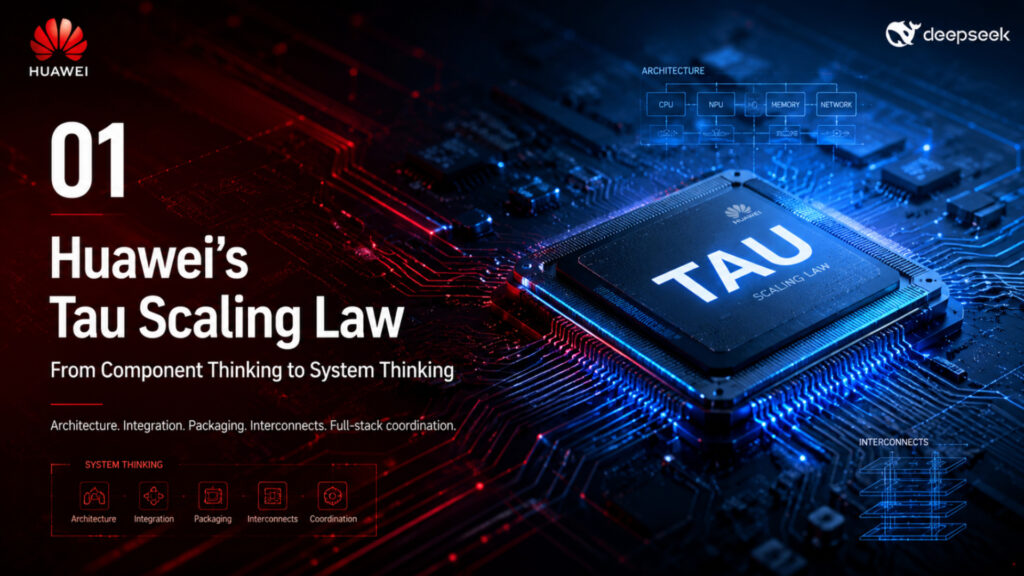
For decades, chips improved through component-level scaling: smaller nodes, more transistors, higher density, and lower cost per computation. But when physical limits and geopolitical constraints restrict the old path, the question changes.
Can performance improve through architecture, integration, packaging, interconnects, software optimization, and full-stack coordination? Huawei’s answer is yes.
Whether every technical claim is fully validated remains to be seen. But the strategic signal is clear: when the direct path is blocked, advantage comes from redesigning the system.
This is why Huawei’s Tau Scaling Law matters beyond semiconductors. It reflects a broader strategic shift from component superiority to system maturity — a lesson every founder and investor should understand.
DeepSeek V4: From Model Power to Cost-Performance Fit
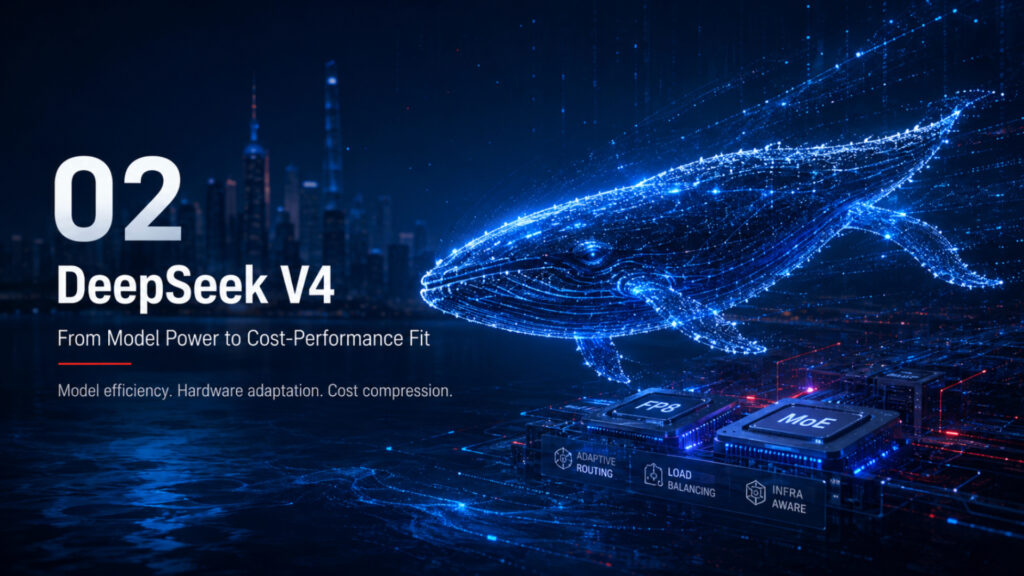
DeepSeek shows the same shift from the model side. The real lesson is not simply that China has produced another strong AI model. It is that model efficiency, hardware adaptation, and cost compression are starting to work together in commercially meaningful ways.
DeepSeek V4’s reported adaptation to Huawei Ascend chips signals a larger ecosystem strategy: models, domestic hardware, infrastructure, and cost-performance logic evolving together. That is different from a pure model race.
A pure model race asks: Who has the most powerful model?
A scenario maturity lens asks: Where can intelligence be deployed reliably, affordably, repeatedly, and profitably?
This is the more important question for founders.
Because cheaper intelligence does not automatically create a better business. Lower inference cost does not automatically create willingness to pay. Open-source momentum does not automatically create defensibility.
The real question is whether a specific market scenario is mature enough to turn intelligence into revenue, retention, workflow advantage, or strategic control.
That is where SMAF becomes useful.
The New AI Moat Is Scenario Maturity
DeepSeek and Huawei challenge a dangerous assumption in the AI application layer: that access to a strong model is enough. It is not.
As foundational intelligence becomes cheaper, faster, and more widely available, the moat shifts from model access to scenario maturity.
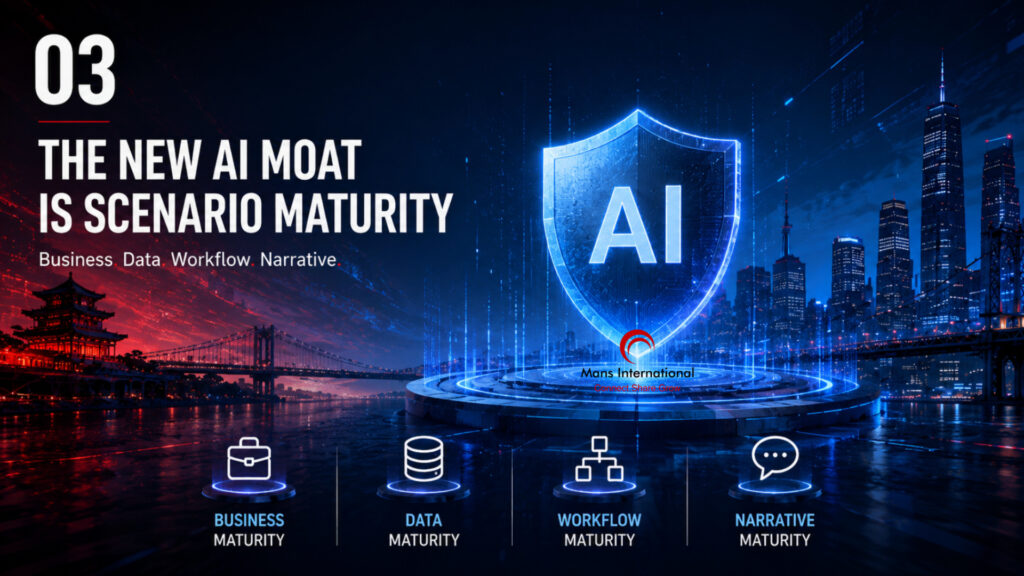
In SMAF, a mature AI scenario is not defined by technical excitement. It is defined by alignment across four dimensions:
- Narrative Maturity: Can users, buyers, and investors quickly understand why this matters now?
- Business Maturity: Who pays, why now, and what budget is unlocked?
- Workflow Maturity: Does the AI fit how users actually work, decide, buy, and adopt?
- Data Maturity: Can the system learn from relevant, repeatable data?
This is why many AI startups fail despite impressive demos. They build around capability before proving scenario maturity.
DeepSeek and Huawei show a different discipline: both respond to constraints through system design.
DeepSeek addresses compute and cost constraints through model efficiency and hardware adaptation. Huawei addresses semiconductor constraints through architecture, integration, and full-stack optimization.
The lesson for founders is not to copy them. It is to identify your own constraint. Is your real bottleneck model quality, data access, workflow adoption, compliance, trust, distribution, cost, budget ownership, or integration? Until you know the constraint, you do not know the strategy.
Constraint does not kill strategy. Constraint reveals strategy.
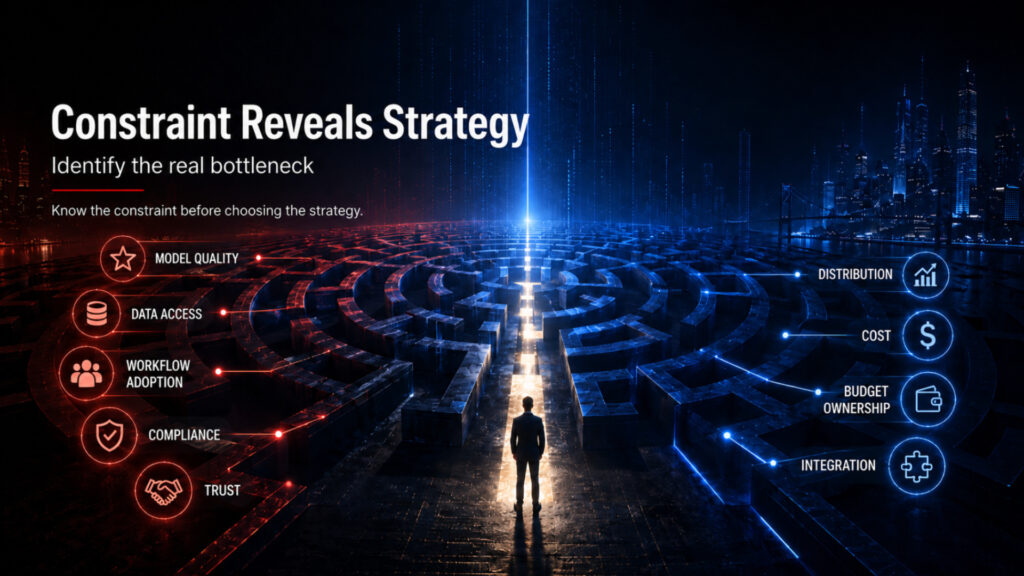
If you are building or investing in the AI application layer, SMAF helps answer a harder question: Which scenario is mature enough to turn intelligence into durable value?
At Mans International, I work with a selected group of founders and investors to assess when an AI opportunity has matured enough to build a real business — and where East‑West ecosystem gaps offer strategic advantage.
Download the SMAF Handbook or schedule an SMAF diagnostic while there’s still time to act.