I. The “Good Enough” Trap is Killing Your Margins.
If your core revenue comes from “deliverables” — code, copy, design, or scoring — 2026 isn’t just another year of tech updates. It’s a survival crisis. Not because AI is extraordinary. But because “good enough” is now almost free.
II. How Musicians Responded: Stop Producing. Start Defining.
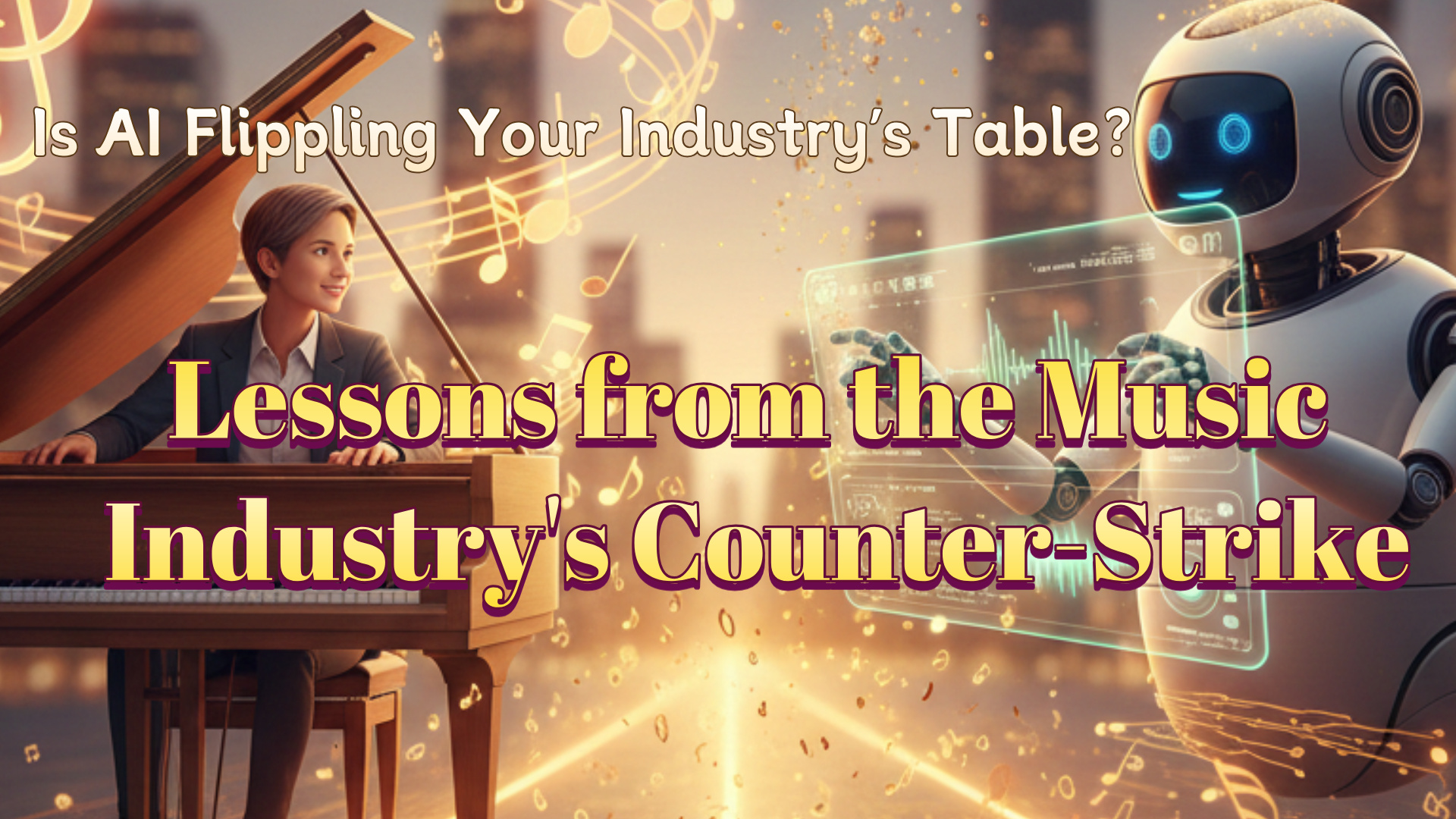
The music industry was one of the first to feel this shock. We saw AI-generated tracks, such as Breaking Rust’s “Walk My Walk,” top the Billboard charts by tapping into raw human sentiment. We saw icons like Yuan Yawei “reverse-cover” AI versions of their own songs to reclaim the narrative.
But the most instructive response wasn’t about competing with AI on output.
It came from a pioneering Chinese game-audio studio, Xiaoxu Music, which asked a far more uncomfortable question: Why do clients hire us at all? The answer was clarifying. Clients weren’t buying music. They were buying atmosphere.
The Shift: They transformed from a content shop into an Experience Architect.
They began delivering end-to-end immersive solutions for theme parks, cultural tourism projects, shopping centres, and live events — integrating:
AI-generated music and visual content
Live performers and musicians
Physical staging, lighting, and spatial design
AI didn’t replace them; it became the invisible engine inside a new, higher-value layer.
III. The “Manus” Signal: Leverage vs. Fulcrum
Many leaders still believe the solution is simple: “Teach the team AI tools.” That’s necessary — but insufficient. Tools are leverage. Direction is the fulcrum.
In late 2025, Meta acquired Manus for over $2 billion. Manus didn’t win by building the biggest LLM. They won by being the Ultimate Orchestrator. By layering models (like Alibaba’s Qwen) and focusing on the Agentic Layer — the ability to understand intent, plan complex tasks, and execute across silos — they proved that the “Moat” is no longer in the math, but in the integration of the human problem.
As the I Ching, or Book of Changes, suggests: “Ride the six dragons to steer the heavens.” The wise don’t fight the storm; they harness the wind to go where others cannot.
IV. The Question Every Decision-Maker Must Answer
In an AI-saturated world, the strategic challenge is no longer: “What can AI replace?”
The real question is: “What layer of value am I uniquely qualified to own?” Call it your “AI Fusion Layer.” AI will rapidly eliminate roles, products, and companies that refuse to redefine themselves. So don’t wait for the rules to settle. They won’t.
If you can’t beat the wave — ride it. And take it somewhere it has never been.
Are you still figuring out your AI Fusion Layer? Let’s connect to discuss where your moat lies in the age of the Agent.
We’ve reached the final days of 2025. A familiar question comes up: “If you had to summarize this year in one word, what would it be?”
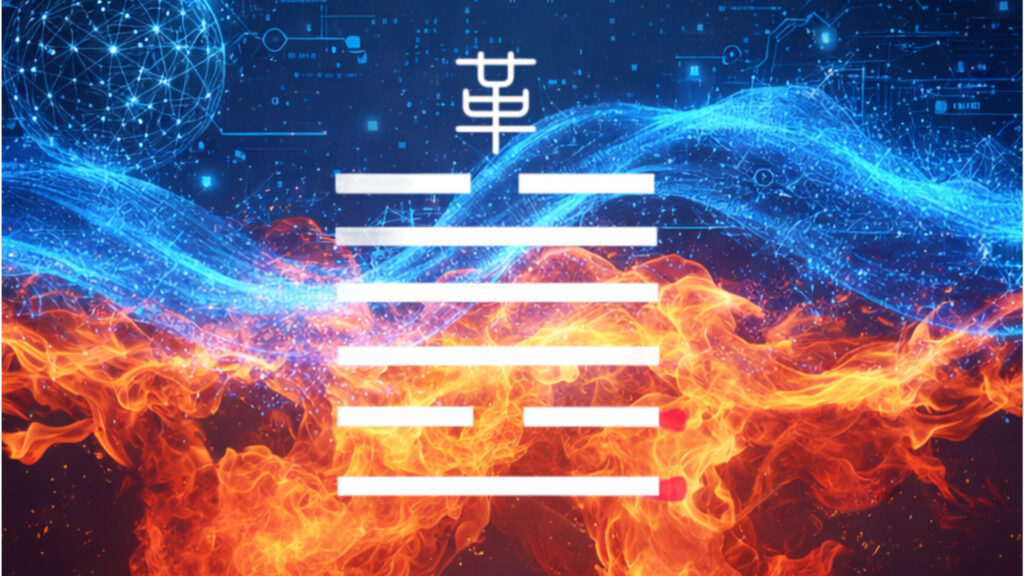
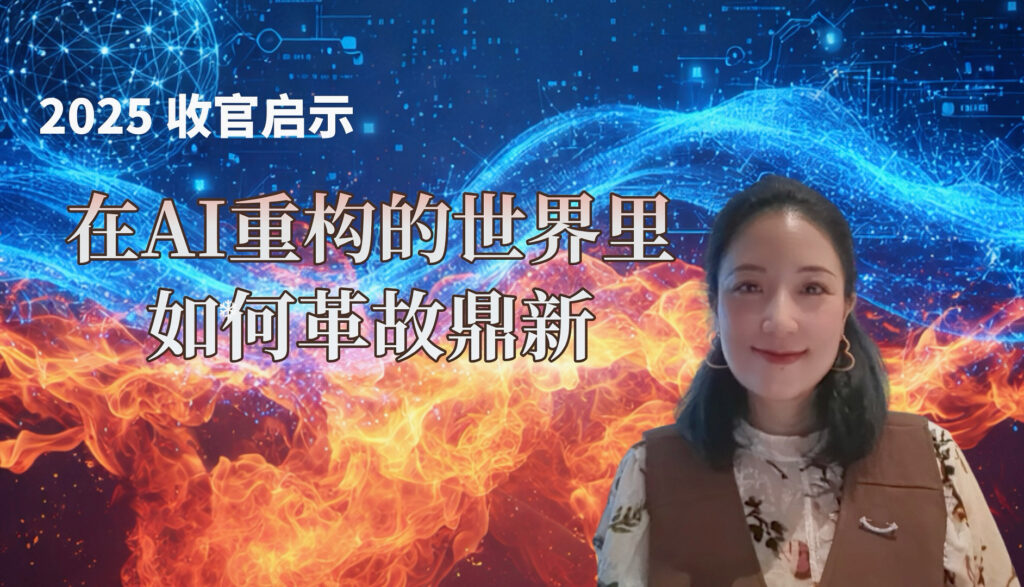
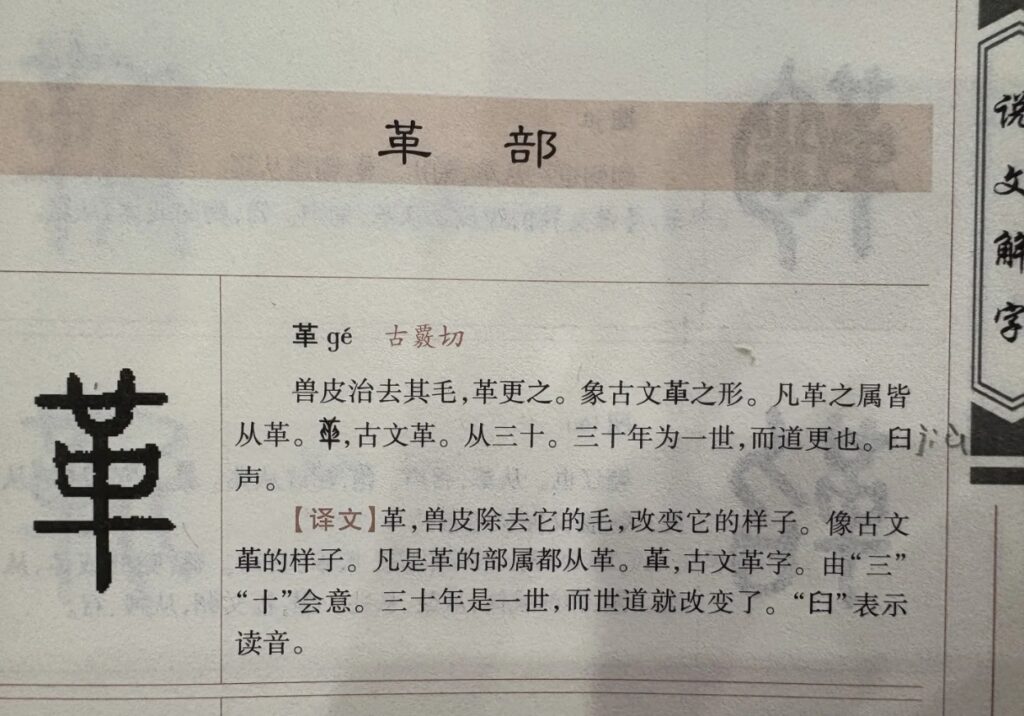
In the ancient wisdom of the I Ching, the word of the year is “Ge” (革). It translates to “Revolution,” but its etymology is far more profound for decision-makers: It means stripping the fur from rawhide to create leather.
Layoffs at major tech firms, the once-unthinkable automation of elite consulting and legal work, and long-standing AI warnings suddenly becoming lived reality — what used to feel abstract now feels personal. For decision makers, this year wasn’t about curiosity. It was about survival.
In moments like this, we need perspective — one that cuts through fear, respects human nature, and helps us act with clarity.
I. The Pivot: From “Inertia” to “Architecture”
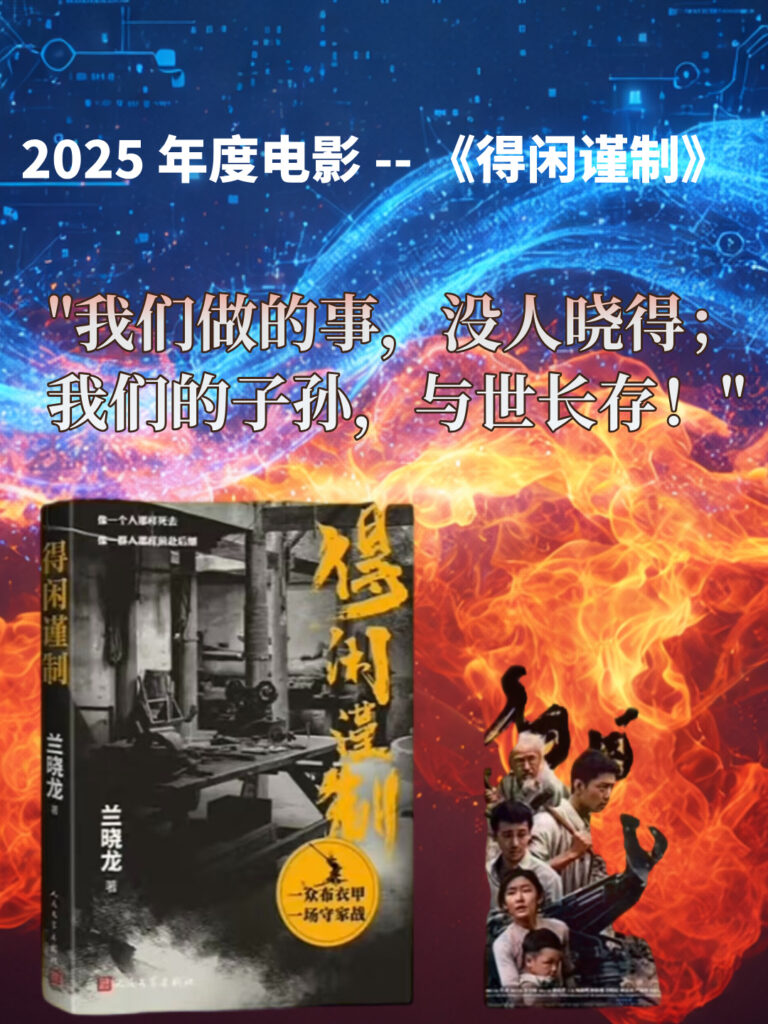
There is a line from the 2025 blockbuster De Xian Jin Zhi that haunted many executives this year: “It is what it is, and it’s already like this.”
It is the mantra of survival inertia. It is the sound of a decision-maker acknowledging that market logic has failed and deciding to simply weather the storm. But in the era of AI rule-rewriting, inertia is fatal.
In the ancient wisdom of the I Ching, each year is associated with a guiding hexagram. 2025 corresponds to the 49th hexagram, Ge (Revolution) — a symbol of profound transformation through the deliberate removal of what no longer fits.
Image: I Ching 2025 Guiding Hexagram — Ge (Revolution)
The Strategic Pattern Behind AI Winners
Look at where real breakthroughs happened this year:
The Hardware contrarians: While the world fought for GPU allocation in a brute-force arms race, Lightelligence went back to first principles. They ignored the silicon rules and bet on optical computing (photonics). They didn’t try to run faster in the old race; they changed the physics of the track.
The Service Architects: Legal AI unicorn Harvey didn’t just build a “chatbot for lawyers.” Knowing a faster horse won’t fix a broken cart, they redesigned high-stakes legal workflows — freeing attorneys from document drudgery to focus on judgment, strategy, and client trust.
Different industries. Same pattern:
Stop chasing optimization inside a collapsing framework. Start defining a new one.
II. The Anchor: Emotional Sovereignty in a “Mocha” World
Innovation requires adrenaline, but endurance requires calm.
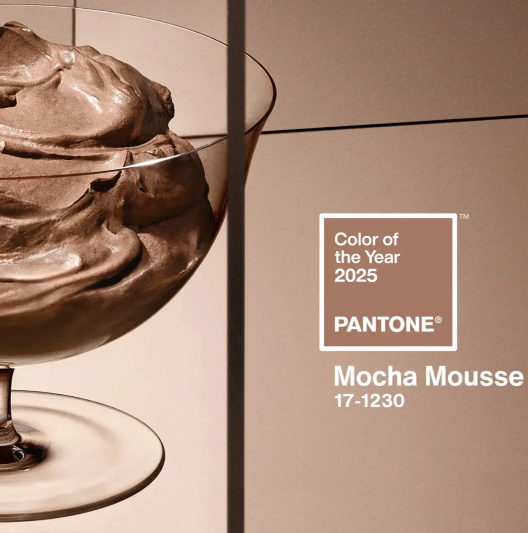
It is no coincidence that amidst this technological velocity, Pantone selected “Mocha Mousse” (17–1230) as the Colour of the Year for 2025, a warm, grounded, unassuming brown.
Image: The Colour of the Year 2025 Pantone Mocha Mousse
Why does this matter to a tech executive? Because the greatest risk to your company right now isn’t a competitor’s algorithm; it is your own burnout.
The cognitive load of 2025 — managing AI integration, calming investor nerves, navigating geopolitical shifts — requires a psychological anchor. “Mocha Mousse” is a reminder that high-tech requires high-touch.
The most resilient founders I worked with this year were those who protected their “offline sovereignty.” Share unhurried dinners with family. Go for walks with no purpose. These are not distractions from the work; they are the fuel for the high-stakes decision-making required.
For leaders navigating AI-driven change, emotional sustainability is now a strategic asset.
III. The Structure: The Era of the “Leaderless Dragon”
At the end of 2025, there is no need to dwell on past instability, nor to be overwhelmed by future uncertainty. Use your willpower to adapt to change.
Use your hands of creation to build new rules.
In the I Ching, Qian Gua offers a powerful image: “A group of dragons without a leader — auspicious.” When centralized authority dissolves, and old power structures fade, the roots of certainty may blur — but in that ambiguity, everyone gains the chance to rise. The true good omen is not waiting for instructions, but awakening the initiative within each person — calmly observing the situation, then acting with clarity and resolve.
2025 is a year of revolution — and also the beginning of a new order. In this once-in-a-century transformation, may you and I choose not to become floating objects carried by the waves, but architects who lay the first stones ourselves.
Let us use wisdom to break through.
Let us use warmth to protect our hearts.
Let us use creativity to keep moving forward.
History has never been written by observers. It is written by those who walk through the darkness — and still choose to light the way.
Step by step.
Ready to Shape Your 2026?
As we move from the year of “Disruption” to the year of “Reinvention,” the window for strategic positioning is narrowing. Let’s turn these insights into your competitive advantage.
For Our Valued Clients & Partners: It’s time to activate your roadmap. Please use your 2025 Value Code to schedule your exclusive 2025/2026 Year-End Strategy Session. We will dive deep into your specific “tanning process” and calibrate your operations for the distributed agency of the coming year.
For New Visionaries & Prospective Partners: If you are ready to move beyond the “raw hide” of AI and into market-ready leadership, we invite you to connect. We are currently opening a limited number of briefings on:
The 2025 Winners’ Ledger: Deconstructing the most successful case studies of the year.
The China Frontier: Vital policy updates and navigating the evolving regulatory landscape.
Strategic Collaboration Sessions: Identifying high-alpha partnerships for the 2026 cycle.
The “Mocha” Moment: An exclusive New Year’s Eve online meditation to sharpen your executive focus for the year ahead.
We’ve all felt this frustration: you lay out the perfect health plan for your parents — take the medication on time, use the monitor, follow the doctor’s instructions. The solution is clear, the reasoning is airtight. Yet what comes back is all too familiar: silence, avoidance, a gentle “I know, I know…,” or a quiet refusal.
We live in an age where AI seems to have an answer for every problem. Models analyze our decisions, devices track our vitals from miles away, and remote systems flag warning signs before symptoms arrive.
But there’s one dimension no algorithm can fully account for: the human response. People don’t move on logic alone — they move on emotion, identity, and the need to feel in control. And that’s often where the “best solution” meets quiet resistance.
Fei-Fei Li, a globally recognized AI pioneer, shares a powerful personal story about her mother that reveals this truth with heartbreaking clarity.
Part I: A Surgery That Didn’t Need to Happen
Her mother had long suffered heart issues and endured multiple surgeries. After a recent operation, the doctor emphasized one essential step for recovery: using an incentive spirometer, a simple device that helps patients strengthen their lungs and avoid complications.
The instructions were simple, the benefit clear — “Just use it. It’s good for you,” everyone said. Yet she resisted: lifting the device only when watched, setting it aside the moment she was alone. As a result, she endured a second surgery that never should have happened.
After returning home, the mother finally revealed her truth:
“In that hospital room, my body, even my thoughts, no longer belonged to me. Doctors, nurses, even you — you were all giving me orders. I felt stripped of my dignity. I wasn’t refusing the device. I was refusing that feeling of being powerless.”
In that moment, dignity mattered more than health. She was pushing back not against the practice, but against the feeling of being arranged.
Part II: The Business Mirror — This Isn’t Just Personal — It’s Strategic
The same dynamic we see in families echoes through organizations.
A major tech company rolled out an AI management system to track productivity, optimize workflows, and automate task assignments — all in the name of “ruthless efficiency.”
The system worked, but the results were catastrophic for morale.
Employees felt they were no longer creators, but components inside a transparent, ever-watchful machine. They feared becoming adjustable, measurable, and replaceable parts.
In version 2.0, they flipped the script: AI became a co-pilot, not a commander. Teams set their own goals, shaped their workflows, and retained meaningful control. Result? A 30% sustained boost in efficiency — plus faster innovation.
Part III: Why the “Best Solution” Isn’t Enough
Across every context — health, leadership, innovation — the same principle holds:
People don’t change because a solution is brilliant. They change when they feel seen, respected, and included.
My parents weren’t rejecting breathing exercises. They were rejecting being instructed. So instead of teaching them, I practiced with them — half an hour every day. When I travelled, I recorded an audio guide so they could choose their own pace.
James Clear writes in Atomic Habits: “Repetition is the foundation of change.” But repetition requires desire, not pressure.
This applies universally:
Teams adopt AI when they feel part of the design.
Employees innovate when their pace is respected.
Partners collaborate when their autonomy is protected.
Families accept guidance when dignity is intact.
Part IV: The New Altitude of Value — Introducing the Human Quotient (HQ)
For founders and investors, this is not “soft philosophy.” It is a hard valuation principle that determines the longevity and success of your venture. We need a new metric to evaluate technology: The Human Quotient (HQ).
Traditional technology assessment focuses on precision, scale, and data: How accurate is the model? How fast is the computation?
The HQ asks the deeper question:
Does this technology expand human autonomy or shrink it?
This distinction will define the difference between enduring companies and disposable tools. The next generation of trillion-dollar companies will be those that build systems where humans feel amplified, not arranged.
Part V: What We Cannot Automate
As AI becomes more predictive and prescriptive, it’s tempting to believe the “best solution” will always win.
But humans don’t operate like code. We carry pride, fear, intuition, and dignity.
Real care — whether in families, teams, or organizations — is never: “I’ve already planned the best route for you.”
Real care is: “I understand your choices, and I’m willing to walk with you.”
In an era defined by AI and automation, the most powerful force isn’t processing speed, predictive accuracy, or algorithmic efficiency — it’s the irreducible core that no machine can replicate:
Human autonomy.
Human dignity.
Human connection.
As technology reshapes everything, remember: the future won’t be won by the smartest system, but by the one that best serves the human spirit.
Ⅰ. The Shift: From Authoring to Directing (The Strategic Signal)
The software industry is currently facing a paradoxical phenomenon: developers are spending less time writing code, yet software iteration speed is accelerating faster than ever before. This change is driven not by a new programming language, but by the AI-native paradigm known as Vibe Coding.
As former Tesla AI Director Andrej Karpathy coined the term, it provided a name for the era: humans no longer write code line by line; we transmit business intent via natural language to an AI, which automatically translates it into executable logic.
This is not merely a development tool; it’s a paradigm shift.
This transformation presents two opposed strategic pathways in the global market:
The US Path: Efficiency Maximization
The US Strategy is Efficiency-Driven, a manifestation of the Silicon Valley mandate: maximize speed and scalability. The focus is on Core Logic and Customization as the ultimate lever for competitive advantage. For instance, a top CRM platform successfully utilized AI-generated customized logic to reduce enterprise system implementation costs by over 40%. This is not a cost-cutting measure; it is a capital acceleration strategy.
The overriding goal is the strategic pursuit of efficiency maximization to secure a competitive edge through market velocity, rapid product iteration, and organizational reinvention.
The China Path: Risk-Controllability Priority
In contrast, China’s approach emphasizes system stability, auditability, and governance. The focus is on Compliance and Safety. A major state-owned bank, for example, embedded regulatory checks directly into AI-generated code, resulting in audit pass rates exceeding 98%.
The foundational goal is ensuring risk and compliance alignment so that the speed of AI does not introduce fragility into critical sectors.
This difference—speed-focused optimization versus stability-focused governance—is an important signal for global tech executives.
II. The Evolution of Code: Where U.S. and China Diverge Strategically
Vibe Coding did not appear overnight. It is the natural continuation of decades of shifts in how software is produced. Yet beneath this evolution lies a deeper truth: U.S. and Chinese enterprises made fundamentally different choices at each stage, and these choices now shape their Vibe Coding trajectories.
1. The Syntax Era (pre-2020): Repetition Reveals Two Philosophies
For over a decade, developers in both markets were weighed down by repetitive, low-value tasks — from Java interface plumbing to iOS compatibility debugging. But how each ecosystem responded foreshadowed today’s strategic split.
The U.S. doubled down on individual leverage.
Developers relied more on personal expertise and community-driven resources such as cheat sheets, “developer roadmap” repositories, and decentralized best-practice guides. The design assumption leaned toward individual autonomy in workflow decisions.
China prioritized collective efficiency.
As early as 2018, Alibaba open-sourced the P3C plugin to enforce unified coding conventions across teams. By eliminating style inconsistencies and common anti-patterns, P3C dramatically reduced avoidable defects. It became an early symbol of China’s preference for organizational consistency over individual preference.
These early choices — individual ability vs. collective efficiency — laid the strategic foundation for the next decade.
2. The Pattern Era (2020–2023): General Intelligence vs. Vertical Precision
As AI-assisted coding entered the mainstream, both markets again made opposite bets.
The U.S. pursued generalized innovation.
GitHub Copilot scaled to tens of millions of developers by 2023, accelerating coding through pattern prediction across the global open-source corpus. GitHub’s research showed an average 18% productivity gain, with a significantly higher impact for tasks that involve boilerplate code. YC mentors even called Copilot an “MVP accelerator” for early-stage teams.
The underlying belief: If a tool enhances individual capability, innovation will propagate organically.
China focused on deep vertical optimization.
Chinese companies built domain-specific templates tied tightly to real business logic—such as complex “618 promotion rules + inventory deduction” workflows—allowing developers to input intent and instantly generate compliant code. Many teams reported that generic AI outputs required heavy rework, while business-bound templates delivered predictable, ready-to-ship results.
This produced a second divergence:
The U.S. bets on general-purpose intelligence spreading across industries.
China bets on execution certainty through domain-specific depth.
3. The Intent Era (2023–2025): Capital Acceleration vs. Compliance Firewalls
As natural-language development became feasible, the two markets moved even further apart.
The U.S.: Innovation accelerated by capital.
Sequoia’s State of AI 2024 highlighted a structural shift: “Developers are moving from writing code to describing behaviour.” Tools like Cursor—capable of generating multi-tenant SaaS systems from natural language—became new VC darlings. The investment thesis was simple:
Chinese enterprises reinforced governance frameworks to manage uncertainty in AI-generated code. Alibaba, Huawei, and major financial institutions embedded code-security reviews, audit trails, and permissions controls into the development pipeline. Startups entering large enterprise supply chains reported significant compliance investment as table stakes.
Here, the divergence becomes structural』: The U.S. chases the speed threshold where innovation compounds. 『China builds a compliance framework where innovation aligns with system stability. These differing priorities reflect variations in regulatory environments, industry structures, and investment incentives.
4. The Vibe Era (2025– ): Organizational Reinvention vs. Execution Intensification
In 2025, Vibe Coding enters its fourth stage.
The U.S. path: “Small teams, larger output.”
Sub-5-person teams now ship products that previously required dozens of engineers and months of work.
The definition of “technical leverage” is being rewritten:
The unit of innovation is no longer the team, but the individual amplified by AI.
The China path: Scaling operational throughput.
Large enterprises use Vibe Coding workflows to enhance existing systems at scale.
Examples include:
Alibaba’s “Luban,” which reduces design cycles by 70%.
SHEIN’s AI-optimized supply-chain logic is improving turnover speed.
The logic:
The U.S. uses AI for new-market creation and product velocity.
China uses AI for system-level refinement and execution density.
Both strategies are rational, and both create competitive advantages.
III. Closing: The Strategic Commandment
Vibe Coding is accelerating a global shift in software development, where the U.S. focuses on universal development paradigms while China emphasizes domain-specific precision and governance. These differences stem from structural market conditions rather than cultural characterization.
A classical strategic principle applies here:
Sun Tzu’s The Art of War states:
“势者,因利而制权。” In modern business terms: “True leverage is not inherent; it is manufactured by recognizing and exploiting current market advantages.”
While Artificial Intelligence has defined the last decade, it remains constrained by classical computation — unable to fully capture the complex probability spaces that govern natural phenomena, such as molecular quantum behaviour.
Quantum systems, by contrast, compute through superposition and entanglement — the very mathematics of uncertainty.
When AI merges with quantum algorithms, the outcome is more than faster processing — it marks the dawn of a new paradigm for reasoning, creativity, and discovery.
II. Case — Insilico Medicine: Quantum + AI, Redefining Drug Discovery
Drug development is notoriously slow and costly — often taking over 10 years and costing around $2 billion per approved drug, with high failure rates due to the limitations of classical simulation.
Quantum computing aims to change that.
According to McKinsey, by 2035, quantum applications in life sciences could create up to $2 trillion in value, driven by advances in molecular simulation and protein folding.
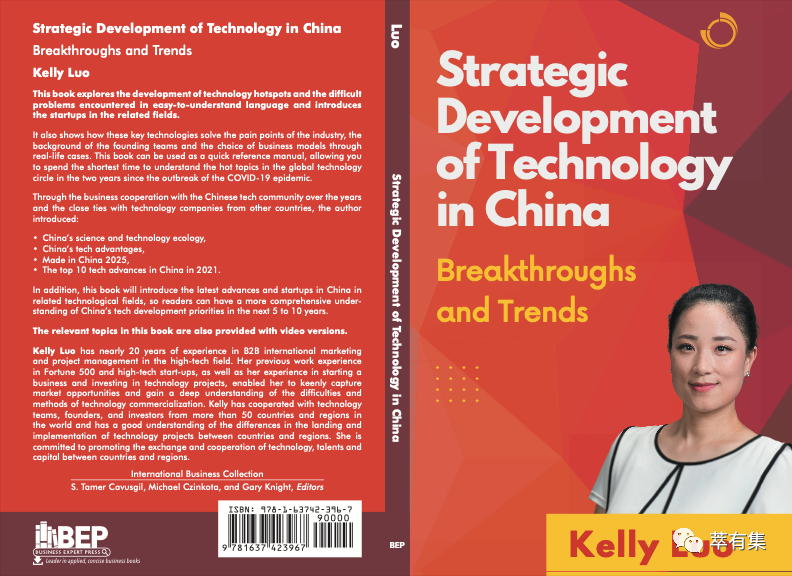
In my book Strategic Development of Technology in China, I introduced Insilico Medicine, a pioneer in AI-driven drug discovery and among the first to explore integrating quantum computing with generative AI.
Book cover:
Its Variational Quantum Eigensolver (VQE) — a leading hybrid quantum-classical algorithm — has demonstrated improved molecular energy estimation accuracy, potentially enhancing drug target modeling.
By 2025, Insilico used a quantum-enhanced generative model to design novel molecules targeting KRAS mutations, one of the toughest challenges in oncology, achieving verified biological activity in early testing.
By combining quantum’s computational power with AI’s predictive intelligence, Insilico exemplifies how the two technologies can create a powerful synergy — accelerating discovery and redefining what’s possible in drug development.
III. Turing Test 2.0 — From Industrial Tools to Cognitive Engines
McKinsey’s long-term outlook (2040+) envisions quantum computing not merely as a faster processor, but as a cognitive amplifier — enabling humanity to simulate aspects of reality once unreachable by classical computation.
The true test of intelligence may ultimately lie at the intersection of information theory and the laws of nature.
Redefining the Test of Intelligence
The Classic Turing Test Evaluates whether a machine can mimic human conversation well enough to appear intelligent — rooted in a deterministic, logic-based framework.
The Quantum Turing Test (QTT) Extends this idea to ask whether an artificial system can model and reason within a quantum world of uncertainty and indefinite causality — a challenge that touches the frontiers of quantum gravity and computational theory.
Though still theoretical, the QTT expands our understanding of what “intelligence” could mean in a universe that resists deterministic explanation.
The New Definition of Intelligence
This shift reframes intelligence itself — from seeking absolute, predictable answers, to building self-consistent, adaptive models capable of operating amid fundamental uncertainty.
IV. Conclusion: Embracing the “Superposition Mindset”
The story of quantum is the story of humanity learning to master uncertainty.
From Einstein’s doubt — “God does not play dice” — to Insilico Medicine accelerating drug discovery with quantum-inspired algorithms, science has transformed uncertainty into strategy.
For decision makers, the key is adopting a Superposition Mindset:
In an age of rapid technological change, the future isn’t binary — it’s entangled, with multiple possibilities unfolding at once.
To lead in the quantum-AI era, we must invest for the long term and cultivate the ability to think, decide, and build amid uncertainty — not despite it.
I. Introduction: The Quantum Inflection Point — A Long-Term Consensus Between Capital and Science
Quantum mechanics is no longer an academic pursuit in the lab; it is a trillion-dollar variable actively reshaping industrial landscapes.
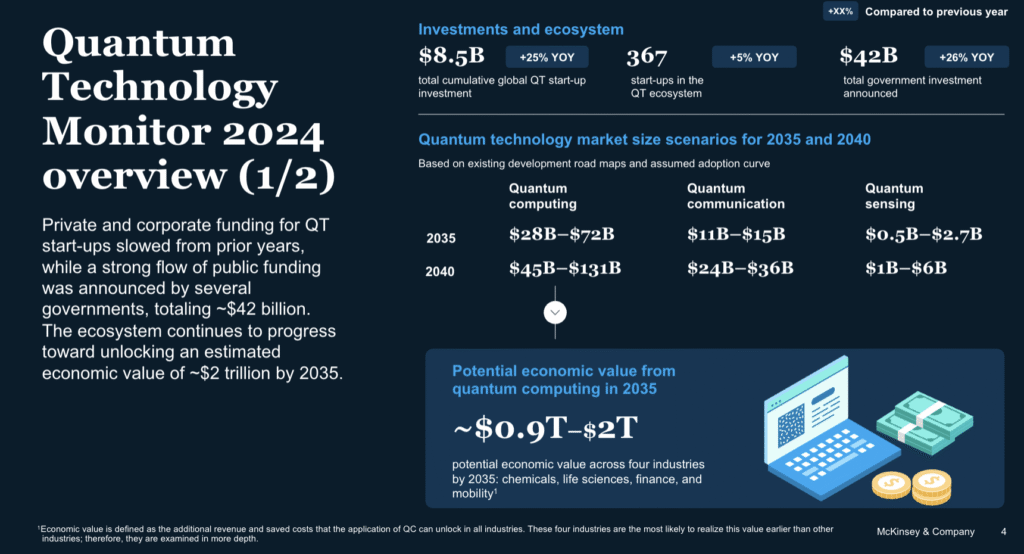
According to McKinsey’s Quantum Technology Monitor 2024, the global quantum technology (QT) ecosystem has attracted $42 billion in public investment. Private investment fell 27% in 2023 to $1.71 billion — but that’s far smaller than the 38% global average decline in startup funding. In other words, long-term capital confidence in quantum remains intact.
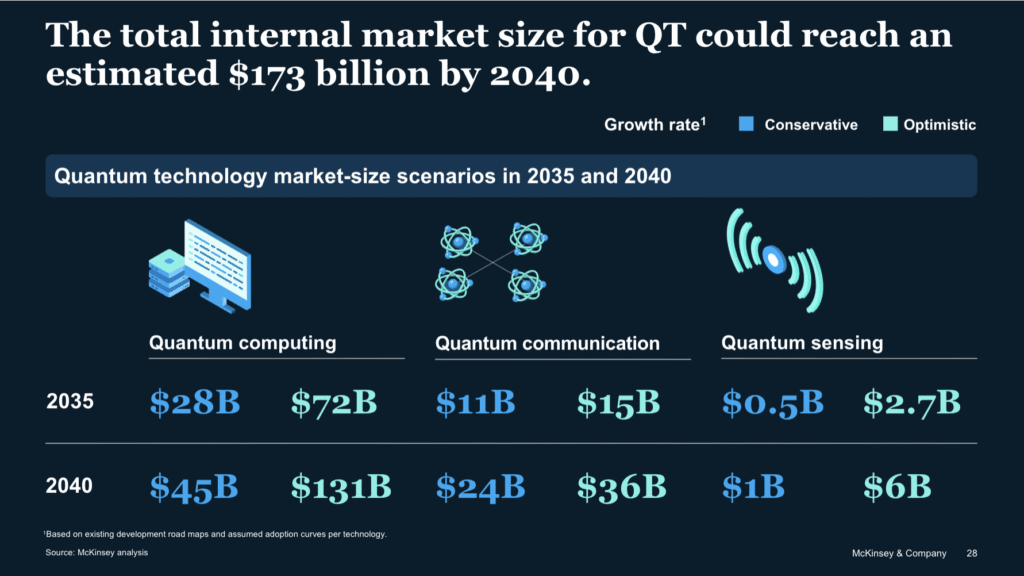
McKinsey estimates that by 2035, quantum technologies could unlock $2 trillion in economic value, with life sciences, finance, chemicals, and transportation as early beneficiaries. By 2040, the combined market size of Quantum Computing, Communication, and Sensing is expected to hit $173 billion.
The 2025 Nobel Prize in Physics has effectively pressed the “accelerator” on this global transformation.
II. The Nobel Prize Decoded: The “Tunnelling Signal” for Industrial Scale
The 2025 Nobel Prize in Physics honoured three pioneers — John Clarke, Michel Devoret, and John Martinis — for their foundational work in “Macroscopic Quantum Effects.”
Their work, at its core, involved creating a 1-centimetre-sized “Josephson Junction” using superconductors and insulators. They proved that billions of electron pairs could act as a single, giant particle, performing a seemingly impossible “collective tunnelling” (or “quantum wall-piercing”) — a quantum effect observed at a visible, macroscopic scale.
This discovery laid the foundation for today’s superconducting quantum computers, bridging the gap between theoretical physics and scalable hardware.
Notably, Martinis later led Google’s quantum team, achieving “quantum supremacy” in 2019, marking a historic moment where quantum systems outperformed classical computers on specific tasks.
The core message behind the honour is significant:
Removing Conceptual Barriers to Scalability: Demonstrating that large systems can show stable quantum behaviour provides the necessary theoretical and experimental basis for developing larger, more complex fault-tolerant quantum computers.
Strong Alignment with Investment Priorities: The Nobel recognition confirms the industry’s shift towards fault-tolerant quantum computing (FTQC). McKinsey reports that in 2023–2024, IBM, Microsoft, and IonQ have made key advances in “quantum error correction.” For instance, IBM utilized 288 physical qubits to preserve 12 logical qubits, resulting in a 90% reduction in error rate compared to traditional methods.
III. Case: IonQ AQ64 — The Commercial Quantum Computer You Can Access in the Cloud
IonQ follows the trapped-ion approach — using electromagnetic fields to capture charged atoms and encode data in their internal vibrations. This design achieves an operational error rate below 0.1%, the most precise among all mainstream quantum computing architectures.
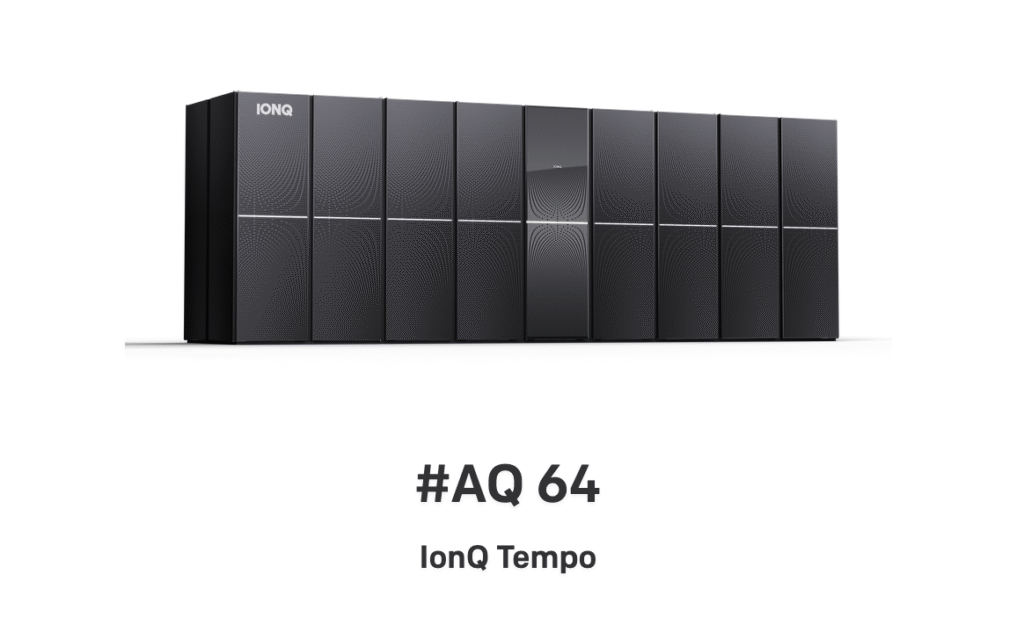
Image source: IonQ
Hardware Leap and Commercial Scale: Its fifth-generation system, “Tempo,” launched in 2025, achieved a milestone of 64 Algorithmic Qubits (AQ). This means the system can simultaneously explore over 18 quintillion computational possibilities — a 268 million-fold increase in processing power over last year’s AQ36, significantly outperforming comparable published IBM systems.
Application and Ecosystem: Tempo has already demonstrated real-world impact across industries:
Energy & materials: simulating lithium-ion battery reactions with Hyundai;
Drug discovery: accelerating molecule screening with AstraZeneca;
Finance & optimization: modelling complex portfolios with Multiverse Computing.
Crucially, IonQ is the only quantum system simultaneously available on Amazon Braket, Microsoft Azure, and Google Cloud, dramatically lowering the entry barrier for enterprises and accelerating commercial adoption.
IonQ is not building prototypes — it’s engineering the backbone of the post-classical computing era.
IV. Closing: Why Investors Should Care Now
Quantum is no longer a far-future bet.
It’s entering the engineering and early commercial phase, where hardware performance translates directly into enterprise applications.
For founders, this means a new layer of computational advantage; for investors, it’s a once-in-a-generation inflection point similar to the semiconductor industry in the 1970s.
The Nobel Prize told us quantum coherence is real. IonQ proved it can be built, scaled, and rented by the hour.