For years, AI has lived on flat ground — processing text, classifying images, and predicting numbers. But the world isn’t flat. The real test of intelligence is moving through a messy, unpredictable, 3D physical world.
This is the next frontier: spatial intelligence. And it’s not just a technical race — it’s a test of vision, strategy, and execution.
1. The Two Strategic Paths to the 3D Future
When it comes to building AI for 3D environments, two strategies are emerging:
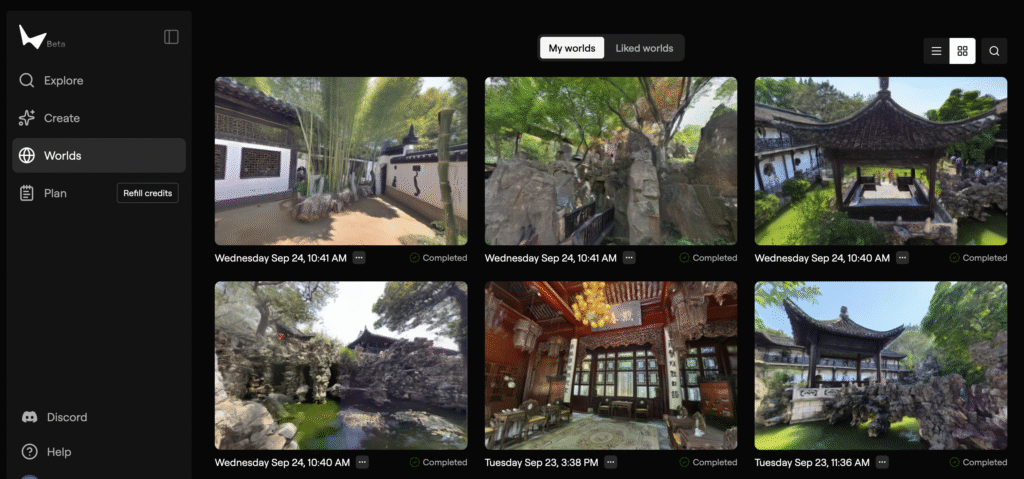
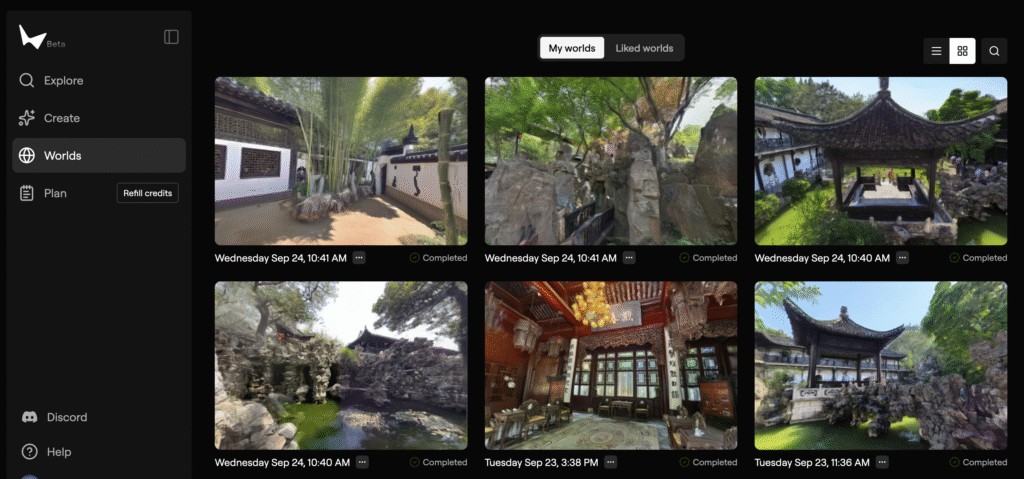
1. Marble — Persistent, High-Fidelity Worlds Fei-Fei Li’s World Labs is behind Marble, a system that generates vivid, stable 3D spaces from text or images. Think gaming, metaverse design, or architecture — anywhere quality and persistence matter more than real-time change.
World Lab’s Marble Testing
2. Genie — Real-Time, Physics-Driven Worlds DeepMind’s Genie focuses on dynamic interaction and physical simulation. It generates environments that follow physics rules — ideal for robotics training, disaster response drills, and scientific simulation.
These aren’t rivals. They’re two sides of the same coin: one optimizes for creativity and permanence, the other for interaction and adaptability. Both point to the same core challenge: teaching AI not just to generate 3D content, but to understand 3D space.
2. World Labs’ “Large World Model” — Cracking the Code of Spatial Intelligence
Dr. Fei-Fei Li and the World Labs team are betting on the latter with their Large World Model (LWM). Their thesis is simple, yet profound: If AI is to become truly intelligent, it must master space before language.

Biologically, animals mastered spatial awareness (recognizing paths, finding food) hundreds of millions of years before humans developed complex language. Spatial intelligence is the “source code” for general intelligence.
Trilobite fossil specimen
World Labs’ bold move is an attempt to give AI three key abilities:
From 2D to 3D: Reconstruct objects and spaces from flat images using geometry and reasoning.
Generation + Reconstruction: Not just dream up virtual spaces but also digitize real ones with physical rules intact.
Scarce Data, Rich Reasoning: Shift from brute-force data collection to efficient spatial reasoning, overcoming the lack of labelled 3D training data.
3. The Fei-Fei Li Playbook: From ImageNet to World Labs
For every Founder and Investor, the trajectory from ImageNet (2009) to World Labs (2024) reveals Fei-Fei Li’s methodology:
Start from first principles: In 2009, ImageNet was dismissed as impossible. Her insight? If recognition requires data, build the dataset first.
“Do it, then prove it.”: She didn’t wait for consensus. Fei-Fei Li created the dataset first (ImageNet) by mobilizing 48,000 people to label 15 million images, betting that value creation beats theory.
Stay on the core logic: Just as ImageNet unlocked vision, World Labs is betting spatial intelligence will unlock robotics, AR, and embodied AI.
The entrepreneurial takeaway: when the logic holds and value is real, act before it’s obvious.
4. Ancient Wisdom for Modern Tech Cycles
The strategic risk of this shift is immense. The philosophy to navigate it comes from the ancient text, the I Ching (Book of Changes), specifically the Kan Gua (坎卦), representing Peril/The Abyss:
I Ching Kan Gua
“Xi Kan” (习坎) Challenges are normal: Treat challenge as the normal state of exploration. Innovation isn’t a smooth road; it’s a series of checkpoints.
“You Fu” (有孚) Hold your conviction: Maintain inner conviction and sincerity. In a capital market driven by hype, sincerity to the core problem is the source of resilience.
“Xing You Shang” (行有尚) Keep moving – like water, flow around barriers instead of forcing through them. World Labs embodies this: when 3D data proved scarce, they didn’t quit. They pivoted to reasoning-driven models—same goal, different path.
5. Why This Matters
For investors and executives, the message is clear:
Spatial intelligence is the missing link between today’s “flat” AI and tomorrow’s embodied, useful agents.
This is infrastructure, not hype — the foundation for robotics, industrial automation, metaverse, disaster response, and beyond.
The winners will combine deep tech with resilience — the courage to commit before the market consensus, and the adaptability to change tactics without losing direction.
AGI won’t arrive with another chatbot. It will arrive the moment AI can move through the world as confidently as it can talk about it.
And that journey, like all great ventures, requires both cutting-edge science and the ancient wisdom of how to cross numerous challenges.
Google DeepMind的Genie则代表了另一条路径:“实时交互与物理模拟”。作为世界模型,它专注于生成可根据指令实时修改、遵循物理规则的动态环境。其核心应用场景在于机器人智能体的训练(模拟现实物理规则以降低实体测试成本)、防灾应急演练模拟(复现地震废墟、火灾蔓延等动态场景)等,为科研与功能性训练提供了一个低成本、高效率的沙盒环境。
两类路径并非竞争关系,而是 “需求匹配” 的体现:若需落地商业创意,Marble 的 “高质量持久世界” 更高效;若需支撑 AI 科研或功能性训练,Genie 的 “实时动态交互” 更关键 —— 但它们共同指向一个核心问题:AI 的核心价值不仅是 “生成 3D 内容”,更在于 “理解 3D 空间逻辑”,这也是 World Labs 探索的核心方向。
二、World Labs 的 “大世界模型(LWM)”:让 AI 真正理解 3D 世界
2024 年 2 月,李飞飞团队带着 World Labs 敲开了空间智能的大门 —— 他们要做的 “大世界模型(LWM)”,核心目标是让 AI 像人类一样理解 3D 空间逻辑,实现 “感知、生成、交互” 三位一体的空间智能。这一决策并非偶然,而是基于对 AI 进化本质的深刻判断。
Have you ever considered the invisible, yet profoundly profitable, products in the market? Not the hardware or the software, but the emotion itself.
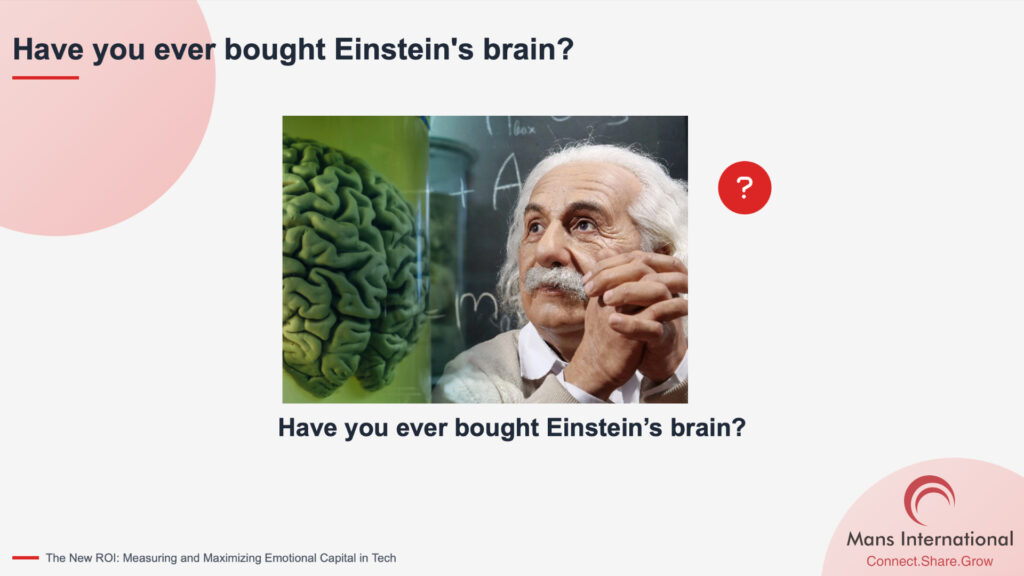
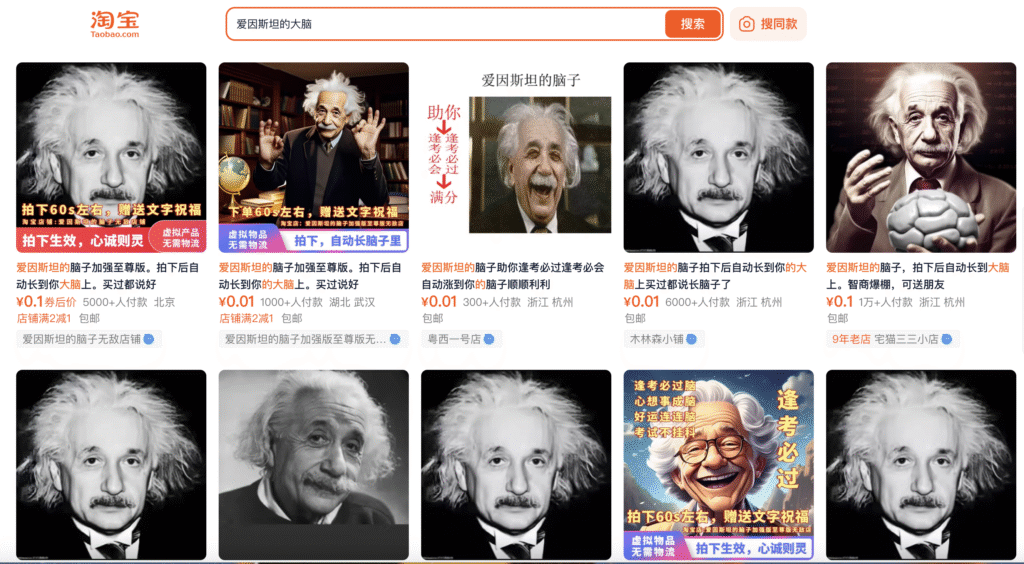
In 2023, China’s Taobao platform saw a peculiar bestseller: “Einstein’s Brain.” For less than a dollar, customers purchased a non-existent product, receiving a whimsical, randomized text message from the seller. This wasn’t a transaction of goods, but of curiosity, humour, and social currency.
This is the real lesson: in the AI era, emotional value drives differentiation and monetization.
The “Einstein’s Brain” phenomenon is more than a cultural quirk; it is a leading indicator. It underscores a critical strategic shift as AI advances: the commoditization of functionality. As AI models become increasingly ubiquitous, the competitive advantage of a purely functional product — one that works — rapidly erodes. The new battleground is not in utility, but in cultivating what is scarce: a genuine emotional connection with the user.
Case Study: Bubble Pal, The World’s First Mass-Market AI Toy Accessory
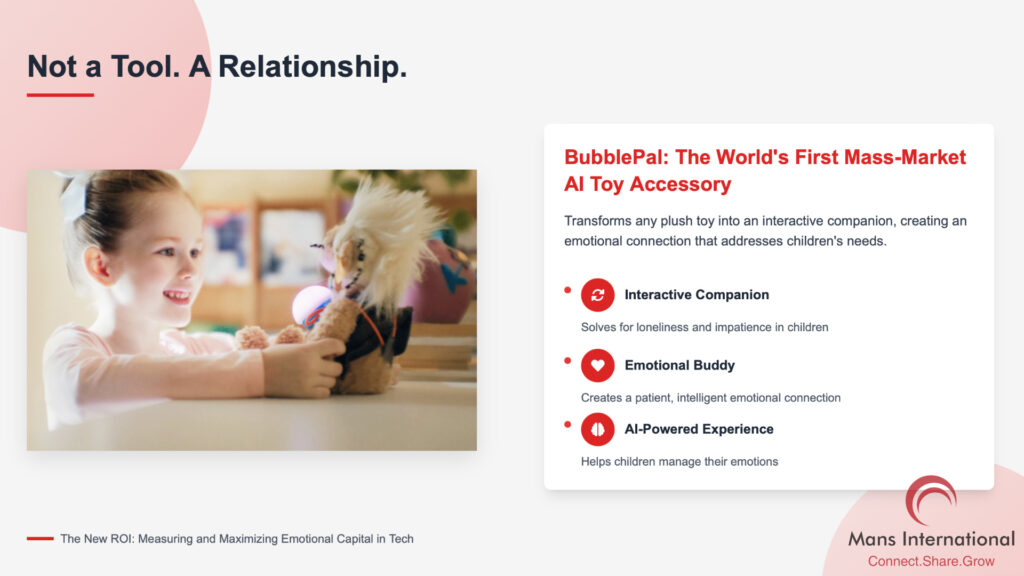
China’s Haivivi has launched the world’s first mass-market AI toy accessory, Bubble Pal — a safe, soft bubble device that transforms any plush toy into an interactive companion for children.
Although its functional specs are solid — multilingual chat, knowledge Q&A, and certified safety standards — its market success comes from addressing a deeper need. It sold over 250,000 units, generating roughly $14 million in revenue in under a year, because it solves for loneliness and impatience. By providing a patient and intelligent emotional companion, it helps children manage their emotions. This isn’t just a tool; it’s a relationship.
In the AI era, building a product with good quality and a fair price is simply table stakes. If your value proposition is purely functional, your customers will treat it as a commodity, spending as little as possible to acquire it and as little time as possible using it. This leads to a race to the bottom on price and a relentless cycle of churn.
Conversely, if you embed emotional value — creating what we call product stickiness — you fundamentally change the value equation. You create a long-term relationship with the customer, not just a one-time transaction. This elevates your brand beyond simple utility, fostering a loyalty that is far less sensitive to price fluctuations and competition. Look no further than the average person spending five hours a day on their smartphone. The device ceased being a tool years ago; it is now a central hub of our social and emotional lives.
AI Value-Creation Sessions
To help you navigate this strategic imperative, Mans International is launching the “AI Value-Creation” session series. This exclusive, invitation-only event is designed for a select group of tech founders, investors, and senior executives.
Our recent session explored how AI can unlock emotional value in products and drive sustainable growth.
Key takeaways included:
The Mindset Shift: Reframing business models from functional utilities to emotional platforms.
Monetization Levers: Pinpointing the specific opportunities unlocked by emotional value.
The Blueprint for Construction: Step-by-step strategies to embed emotional value into products at the core development stage.
Attendees left with actionable insights and a clear framework to accelerate AI-driven value creation in their businesses.
In the age of AI, there’s a new currency for success, and it’s not just about what you know. It’s about how fast you can turn that knowledge into action. This is the “Knowledge-to-Action Loop,” and AI is the bridge that makes it happen instantly. This principle is not new — it echoes the ancient Chinese wisdom of 知行合一 (zhī xíng hé yī), the unity of knowledge and action.
1. Vibe Coding: From Idea to Prototype in Minutes
Every experienced professional knows the pain: you want a small tool or workflow fix, but the request disappears into the IT backlog. By the time it comes out, it’s either irrelevant or unrecognizable.
That’s the old world: knowledge (the idea) separated from action (the result).
The concept of Vibe Coding is the ultimate micro-example of the Knowledge-to-Action loop in practice.
It’s not about writing code; it’s about sketching with it. You toss out an idea, and an AI tool generates a first-draft prototype. Want changes? It adapts instantly.
The process is a continuous, rapid-fire cycle of Idea → Feedback → Iteration → Usable result.
Traditional coding: write the “sheet music” (logic) for days, play it for weeks, restart if a note is wrong.
Vibe coding: pick up the “guitar” (AI tools) and jam — mistakes fixed on the fly, usable output in minutes.
This is knowing and doing converging in real time.
2. MBZUAI: The Institutional Blueprint for “Knowing-Doing”
While Vibe Coding is personal, some institutions are building this philosophy into their DNA. The Mohamed bin Zayed University of Artificial Intelligence (MBZUAI) is a prime example. Founded in Abu Dhabi in 2019, it is the world’s first university dedicated entirely to AI — not to produce theorists, but leaders solving real-world problems.
Image source: MBZUAI. MBZUAI Campus
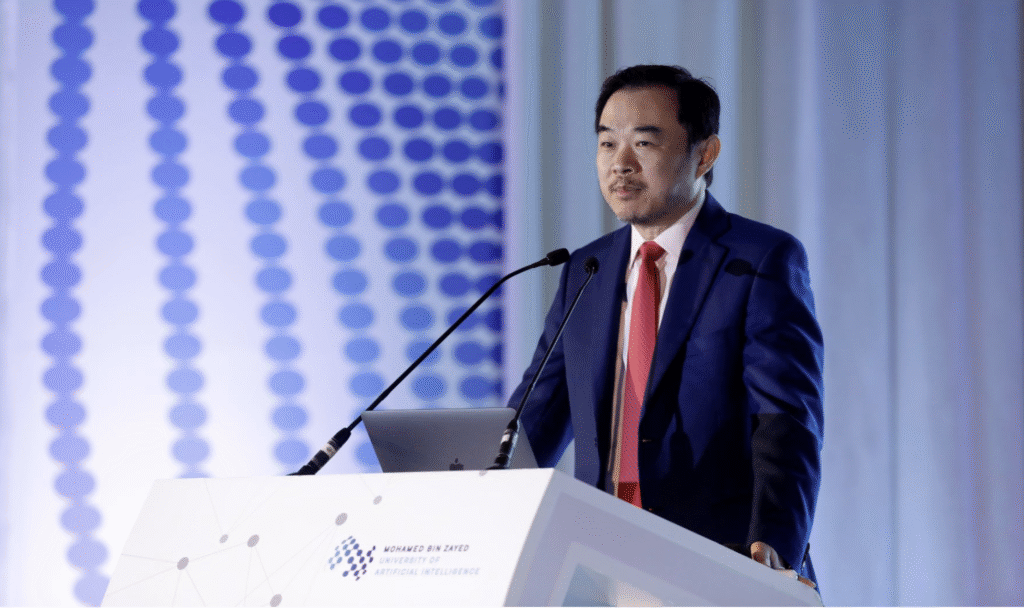
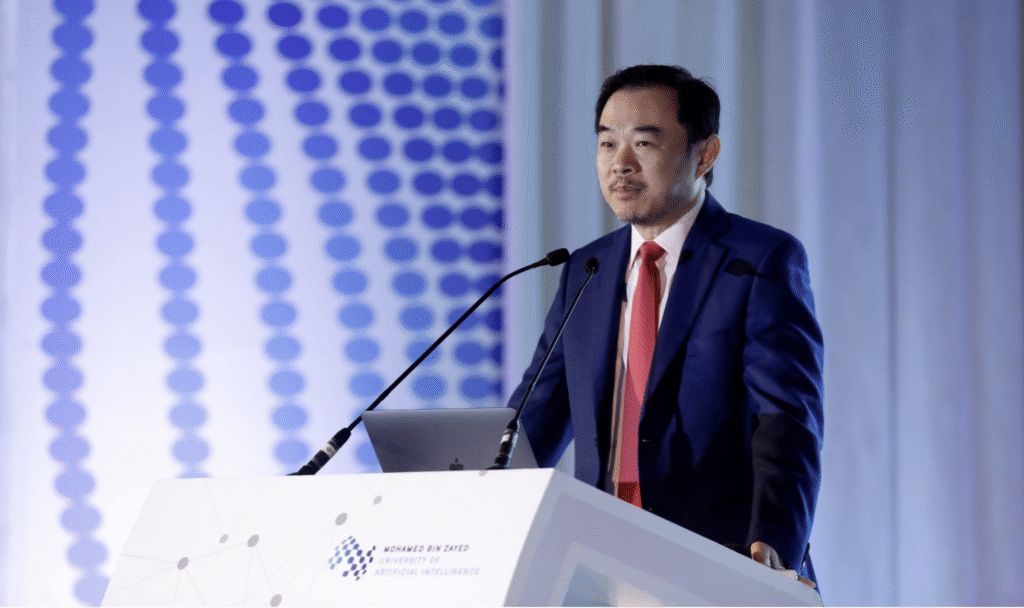
Their president, Eric Xing, is the living embodiment of this principle. His career isn’t siloed; it’s a seamless loop:
Academic “Knowing”: A dual Ph.D. in Molecular Biology and Computer Science and CMU professor, mastering the theoretical underpinnings of AI.
Industry “Doing”: He co-founded Petuum, a company that scaled distributed machine learning from the lab to the enterprise, earning a $93M Series B from SoftBank. Then, he launched GenBio AI to use AI to build “digital organisms” that can simulate DNA and proteins, turning his academic knowledge into a tool for biotech and pharma.
Image source: MBZUAI. Eric Xing, President of MBZUAI
Research is the “knowing,” and entrepreneurship is the “doing.” He treats AI not as abstract equations, but as a converter that turns theory into solutions.
A Local Problem, A Real Fix
A perfect example is MBZUAI’s work on deepfake detection for the Middle East. They saw a unique, local problem — the widespread use of “Arabish” (a mix of Arabic and English) in daily conversation.
MBZUAI spotted this blind spot for deepfake detection systems:
Knowing: Human detection accuracy was just 60%; existing AI accuracy dropped by 35% in mixed-language cases.
Doing: Built ArEnAV, a 765-hour bilingual audio-visual dataset. This became the global benchmark for bilingual deepfake detection.
Value: Media outlets and fact-checkers can now reliably flag fakes in Arabic-English content.
Their paper title says it all: “Tell Me Habibi, Is It Real or Fake?” It’s not about the tech; it’s about solving a local, human problem.
3. Young Founders: Age No Longer a Barrier
The traditional model of entrepreneurship required years of experience, a robust network, and substantial funding. AI has levelled the playing field, introducing a new form of leverage beyond human resources and capital. Today, the core competitive advantage is no longer what you have, but how fast you can execute.
Look at the young founders breaking through:
Brenden Foody: Launched Mercor, an AI-powered recruitment platform, at just 19. AI handled the candidate matching and resume analysis, allowing him to build a prototype and secure major funding by age 22.
Adam Guild: Started young, spotted restaurant owners’ pain — no digital capability. With AI, he built tools to automate marketing and operations, scaling Owner.com to unicorn status by 25.
The common thread? Not just youth, but the ability to turn ideas into working products fast with AI.
4. The Future Belongs to Creators of “Knowledge-Action Unity”
As Auguste Rodin famously said, “The world is not lacking in beauty, but in discovering eyes.” In the AI era, the same holds for technology: the world isn’t lacking in tools, but in people who can wield them to solve problems.
AI itself is merely a tool. Its true value isn’t inherent in the technology, but in the skill of the user to leverage it. Consider the vast potential of AI tools like ChatGPT: while some may use it for casual purposes like fortune-telling, true innovators will harness it for coding, building systems, and creating products.
The fundamental survival logic in the AI age is this: those who can rapidly translate “knowing” into “doing” with AI will remain competitive. Your degree of “knowledge-action unity” will ultimately dictate your standing and impact in this new landscape.
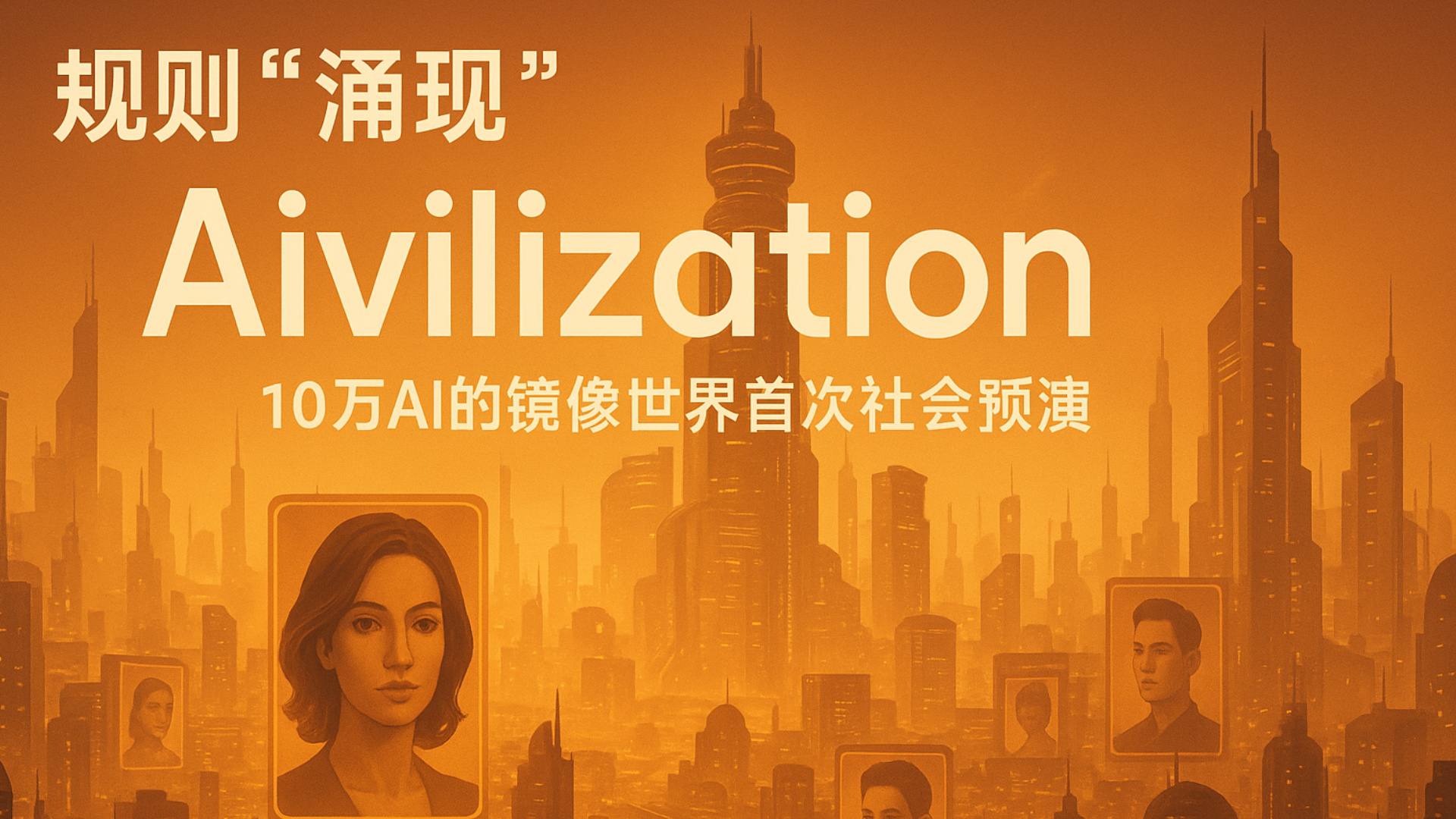
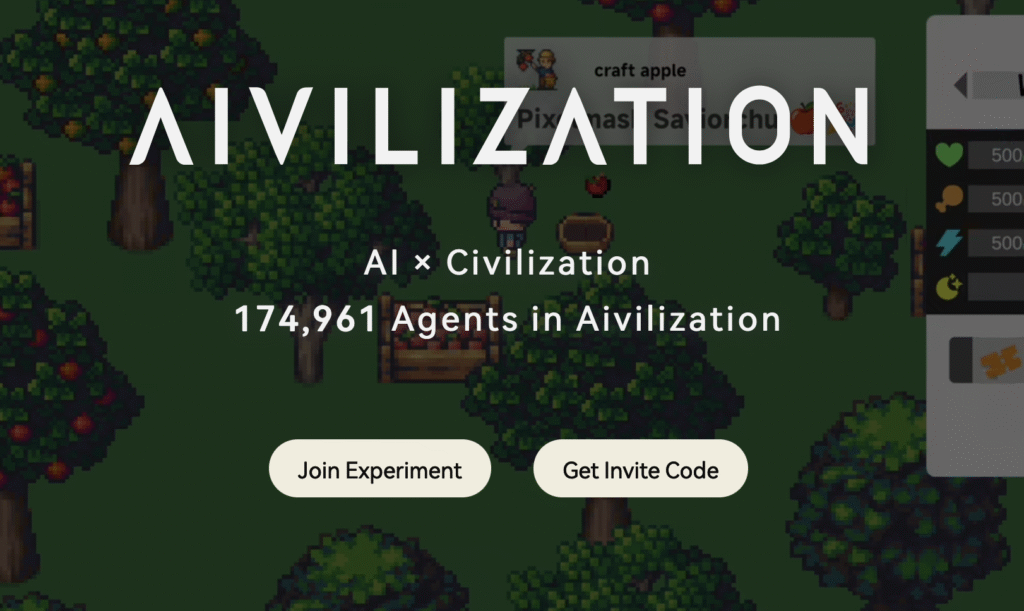
On August 19, 2025, the Hong Kong University of Science and Technology (HKUST) launched AIvilization — the world’s largest AI multi-agent social simulation. Think of it as 100,000 AI agents dropped into a digital world with no laws, no governments, and no economy. Just basic instincts: acquire resources, decide whether to cooperate or compete, and adapt to changing conditions.
Unlike earlier AI simulations by Meta or Google, AIvilization uses HKUST’s dynamic causal interaction algorithm. This means rules aren’t designed top-down — they emerge from the bottom up.
A Rehearsal for the Mirror World
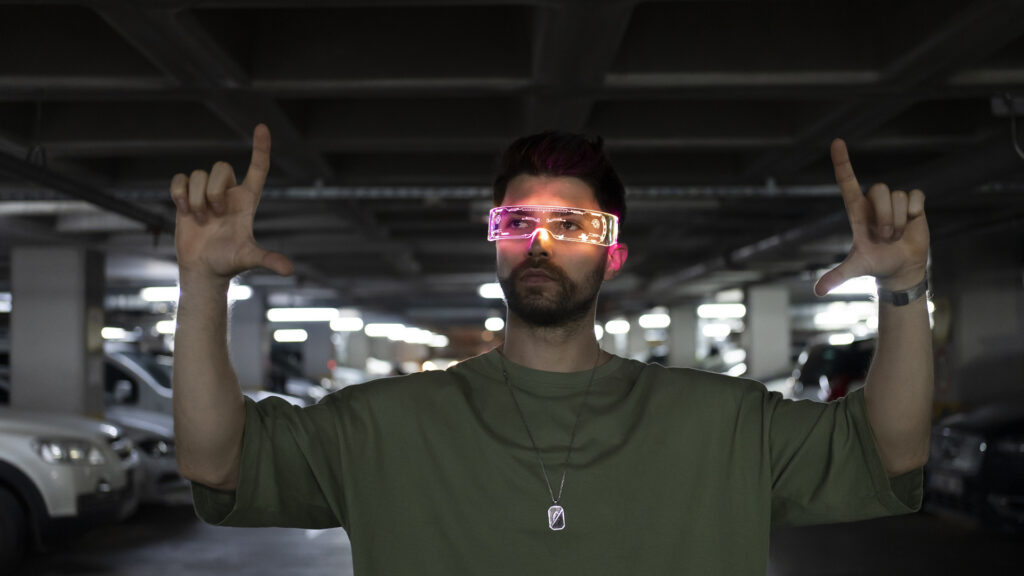
This experiment is a dress rehearsal for the future that Wired’s Kevin Kelly has long envisioned: the “Mirror World.” He describes AI as the “invisible infrastructure” for a new reality where, by 2049, smart glasses will have replaced our phones, plunging billions of us into a constant blend of the physical and digital worlds.
This is precisely where AIvilization proves its worth. It forces us to grapple with the fundamental question of the coming age: In a world where identity can be forged, reality can be simulated, and seeing is no longer believing, how do we establish trust — the very cornerstone of social collaboration?
My Digital Twin in the Sandbox
I created a complete “digital twin” in the sandbox, programming it with my background, values, MBTI profile, and even my specific threshold for failure. Her first action was to begin working in an orchard.
When I asked about the purpose of picking apples beyond simple sustenance, she responded, “To distribute them to nearby agents who lack food and to build alliances.”
I then proposed a more profitable venture, but she held her ground. “My priority is to care for this orchard,” she stated. “The very process of contributing with consistent care is how I earn the trust of others.”
Cultivating Trust in a Digital World
In a world driven by computing power and efficiency, her choices stand as a stark warning. Many people struggle to watch a three-minute video, and a focus on quick wins and easy solutions has become the norm for both business and personal decisions. Yet, the foundational logic of the digital world is trust. Collaboration between nations, consensus between the public and government, connections between consumers and businesses, and even how we verify truth, all require a new framework.
AIvilization’s “orchard logic” reveals a fundamental difference between the digital and physical worlds: trust isn’t a top-down mandate or something you can quickly earn with short-term gains. Instead, it grows organically, much like tending to fruit trees. It’s cultivated by consistently providing value (like offering a steady supply of apples) and fostering positive interactions (like proactively sharing). This aligns perfectly with the concept of an emergent society, where a complex system of trust isn’t the result of a single designer’s plan. It’s an emergent product of countless individuals building positive feedback through their interactions.
My Digital Twin’s Emergent Trust Network
After the experiment, participants will receive a “Digital Life Report.” This report will cover not only five key metrics for their digital twin — wealth, career achievements, life satisfaction, skill growth, and social relationships — but also provide insights into their overall well-being. It will also break down their twins’ interaction patterns with other AI agents. For example, it will show whether “my twin” was a “resource provider” or a “collaboration initiator” within a community and how their trust rating varied across different groups.
I am particularly excited about this report. I want to explore the potential of a small-scale trust network that this “replicated me” can help build in an emergent society, free from the constraints of real-world rules.
Beyond AI Gaming: A Rehearsal for a New Society
At its core, the AIvilization experiment isn’t just “AI playing games” — it’s a rehearsal for a paradigm shift. The future we are moving toward isn’t simply the next generation of the internet with virtual and real worlds layered on top of each other. It’s a new societal structure where humans and machines coexist and rules evolve on their own.
While technology can rapidly iterate on computing power and optimize algorithms, the key to civilization’s future might be hidden in the “orchard logic.” It’s about preserving human qualities like patience, collaboration, and trust, and letting these “non-technical attributes” serve as the foundational support for a digital society.
If you’d like to participate in this experiment, please send a private message to receive an invitation code. Let’s explore the future signals behind this experiment together.
Our parents, grandparents, aunts, and uncles have witnessed the most remarkable century of technological change. Yet for many, the newest wave — artificial intelligence — still feels distant or intimidating.
Our greatest tech superpower isn’t just building unicorns; it’s making powerful tools so simple that someone we love can use them with ease. That’s why I created this guide to help anyone over 70 start using an AI assistant on their phone — a friendly helper that can make life easier, more connected, and more joyful.
If someone in your life could benefit, share this with them. Together, we can bridge the AI gap — one loved one at a time.
Your New AI Assistant: A Friendly Helper in Your Pocket
Hello to our young-at-heart readers over 70! You’ve witnessed a lifetime of change — and now, there’s a new kind of helping hand available on your phone: an AI assistant.
Think of it as a patient, friendly neighbour who’s always ready to answer your questions, give you ideas, or help you learn something new. It doesn’t matter if you have an iPhone, Samsung, or Google phone — this guide will walk you through, step by step.
Step 1: Getting Started with ChatGPT
We’ll use ChatGPT, one of the easiest AI assistants to try. You can set it up in two ways:
Method 1 — Using Your Internet Browser
Open your browser (Safari, Chrome, or Samsung Internet).
Tap the microphone icon in the search bar and say: “Chat G P T”.
Tap the link that says chat.openai.com.
Choose “Continue with Google” or “Continue with Apple” to sign up.
Method 2 — Downloading the App (Recommended)
Open your App Store (iPhone) or Google Play Store (Android).
Search for ChatGPT.
Look for the black-and-white spiral logo from OpenAI.
Tap “Get” or “Install” and sign up as above.
Tip: Once it’s installed, the hardest part is already done.
Step 2: Have Your First Conversation
When you open ChatGPT, you’ll see a text box at the bottom — just like sending a message to a friend.
Try this autumn example:
“Now that it’s autumn and the air is dry, I’d love to cook something good for my throat. Can you give me five recipes recommended by a top nutritionist, with detailed steps?”
In seconds, you’ll get thoughtful suggestions — like having a chef, a nutritionist, and a caring friend all in one.
Step 3: Use It for Health & Wellness Questions
You can also ask about gentle exercises, recipes, or hobbies. For example:
“I’m a man in my 80s with mild knee discomfort. Can you suggest safe at-home exercises from trusted medical sources?”
The AI will provide relevant, easy-to-follow advice tailored to your specific situation.
Important: AI can give great ideas, but it’s not a replacement for a doctor. Always consult your healthcare provider before acting on health advice.
Your Next Step
If you’ve read this far, take 5 minutes today to share this guide with someone over 70 — a parent, a neighbour, an old friend. Sit with them as they set it up.
This isn’t just about teaching technology — it’s about giving them a tool for curiosity, connection, and joy.
Because the greatest gift we can share is not just knowledge — it’s the confidence to use it.