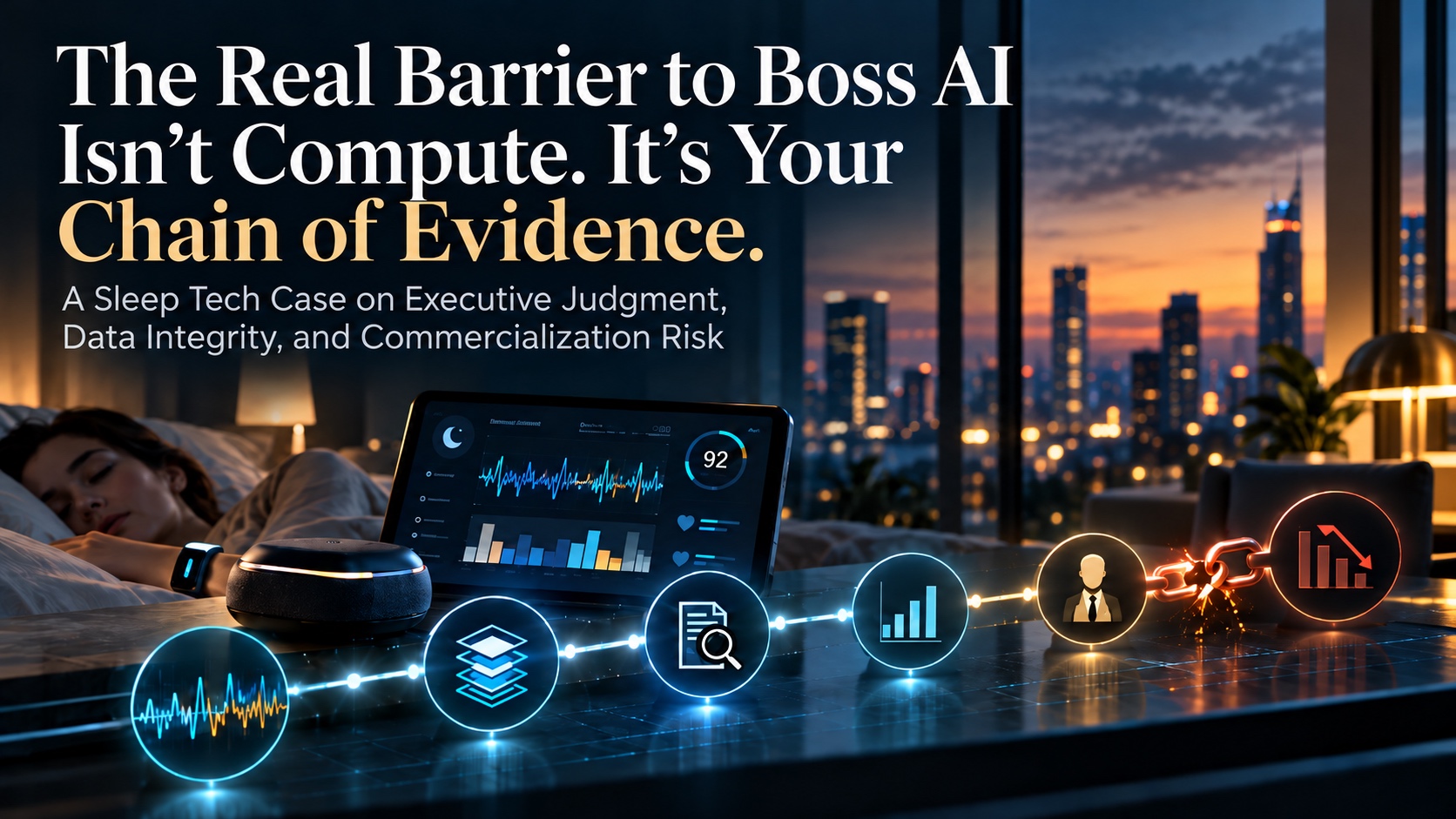
A Sleep Tech Case on Executive Judgment, Data Integrity, and Commercialization Risk
Kelly’s Global Tech Intelligence #242; Issue 54, 2026
Imagine a Sleep Tech company reporting steadily improving completion rates and sleep outcomes.
The executive dashboard looks encouraging. User engagement is rising, and nearly every key performance indicator is green.
Yet, one fundamental question deserves more attention than the growth curve itself:
“Who defined ‘completion’ and ‘improvement’ in the first place?”
- The product team measures whether users consistently operate their devices.
- The medical team evaluates the technical quality of sleep-monitoring signals.
- The operations team tracks app check-ins and daily active use.
All three departments may be reporting completely accurate numbers. Yet they are not necessarily measuring the same outcome.
Device activity does not establish clinical adherence. Complete data records do not demonstrate improved sleep. And daily app check-ins cannot prove that an intervention creates lasting health value.
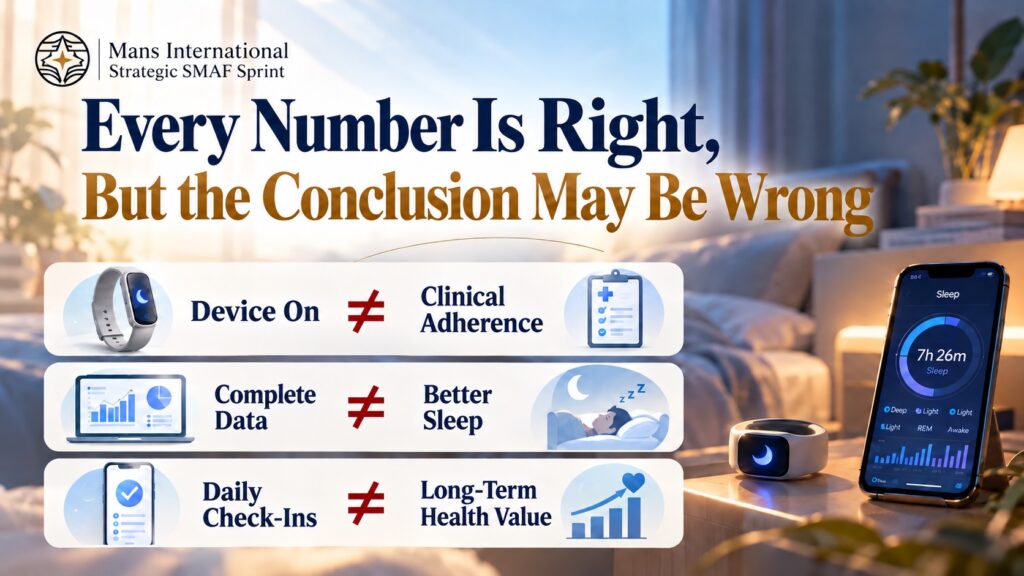
The most dangerous business decisions are rarely built on false data. They emerge from accurate metrics that collectively support the wrong conclusion.
As companies introduce AI-powered executive decision assistants—increasingly described as “Boss AI” (autonomous agents designed to aid and challenge executive decision-making)—this distinction becomes critical.
01 | What Is Boss AI? (And Why Your Dashboard Isn’t Enough)
Traditional dashboards summarize performance, identify trends, and flag anomalies. Advanced analytics platforms provide real-time reporting.
Boss AI must offer something fundamentally deeper.
Its true value lies in helping leadership question the underlying evidence and assumptions behind a conclusion—not simply presenting that conclusion with greater conviction.
Consider a Sleep Tech platform detecting an anomaly in overnight monitoring data.
A dashboard can identify the anomaly. An AI assistant may suggest possible causes. But interpreting the signal requires an understanding of the context in which the data was generated. This is where executive judgment remains essential.
This chain of evidence is further complicated by global market nuances. Over two decades of working across North America, Europe, and Asia, I’ve seen that identical data patterns can reflect very different user behaviours and operating environments. In my experience:
- In certain North American demographics, missing environmental data often stems from deliberate privacy choices rather than hardware glitches.
- In multi-generational households, common across Asian markets, ambient noise introduces background variables that alter algorithm interpretation.
These are the weak signals executives cannot blindly delegate to automated systems.
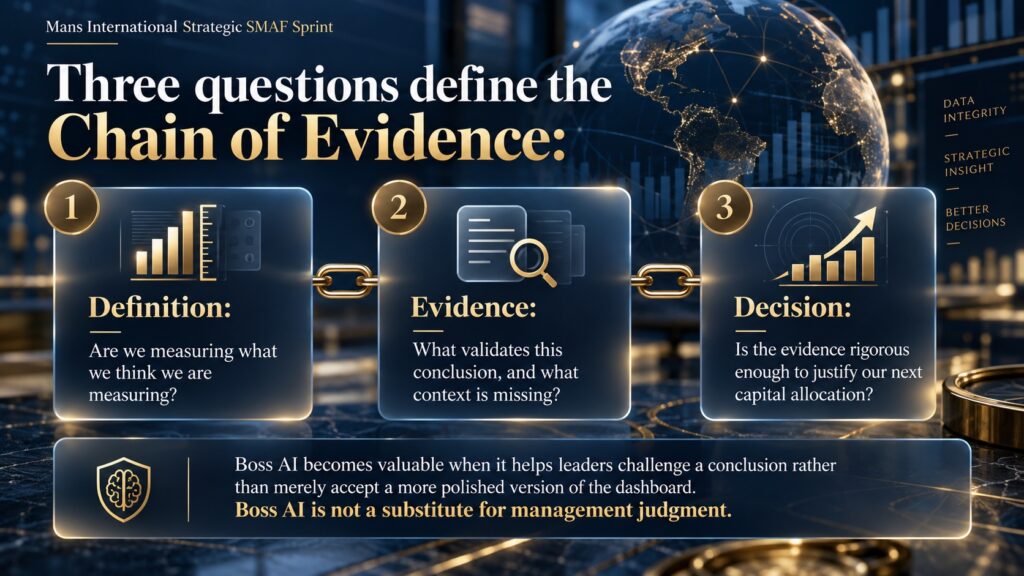
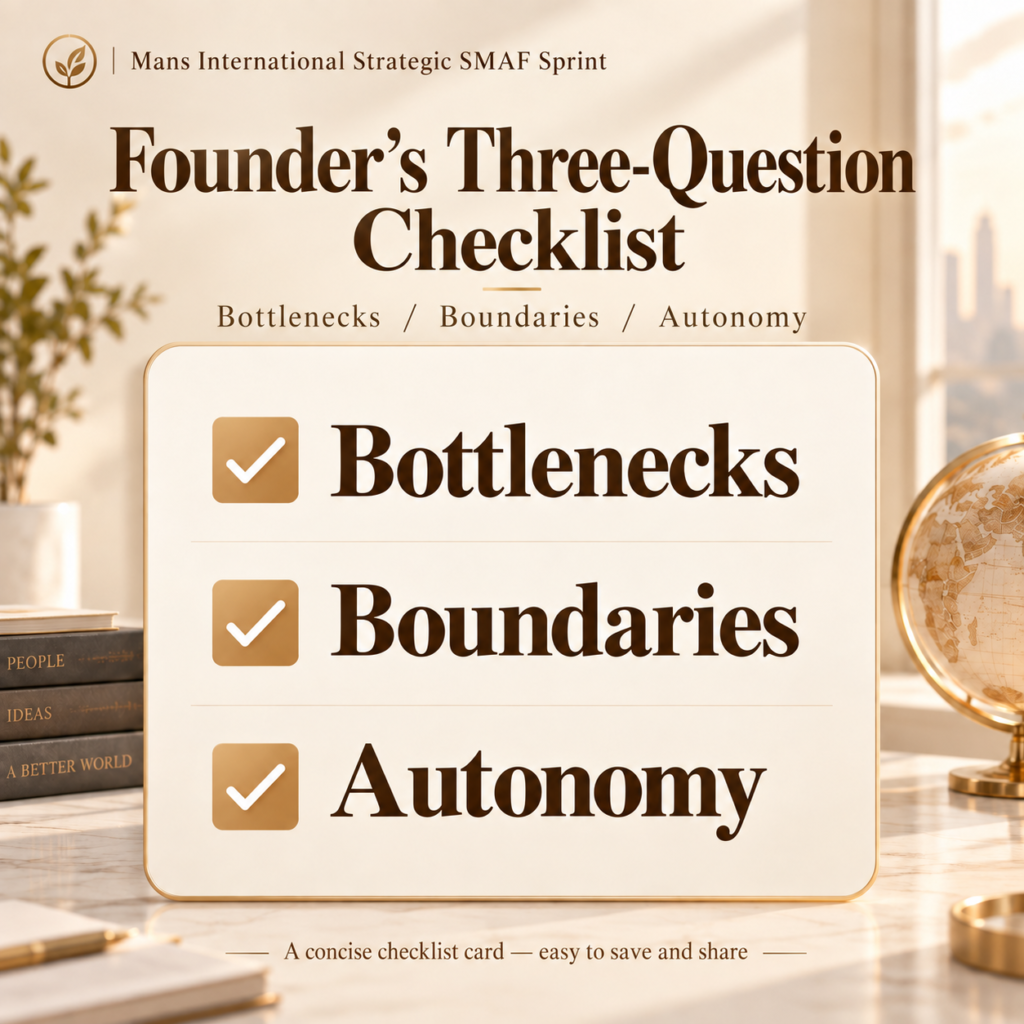
AI identifies patterns at unprecedented speed, but statistical confidence does not automatically equal commercial significance. For executives and board members facing high-stakes decisions, three questions define the Chain of Evidence:
- Definition: Are we measuring what we think we are measuring?
- Evidence: What validates this conclusion, and what context is missing?
- Decision: Is the evidence rigorous enough to justify our next capital allocation?
Boss AI becomes valuable when it helps leaders challenge a conclusion rather than merely accept a more polished version of the dashboard. Boss AI is not a substitute for management judgment.
It can help leaders explore relationships, challenge assumptions, and evaluate alternatives. But it cannot replace responsibility for determining what the evidence actually supports.
02 | Decision-Making Under Uncertainty: Stress-Test Your Assumptions
Consider a strategic crossroads facing many health tech founders:
Should the company pursue a regulated medical pathway (such as clinical sleep apnea screening) or launch a consumer wellness offering?
Both pathways offer substantial enterprise value, but their risk profiles differ completely:
Strategic Dimension
Medical / Clinical Pathway
- Key Dependencies: Clinical trials, FDA/CE clearance, physician workflows, reimbursement
- Primary Risk: Regulatory delay & adoption friction
- Reversibility: Low (High capital & time lock-in)
Consumer Wellness Pathway
- Key Dependencies: Rapid user acquisition, engagement, consumer retention & subscription
- Primary Risk: High churn & “orthosomnia” fatigue
- Reversibility: Moderate (Fast iteration cycles)
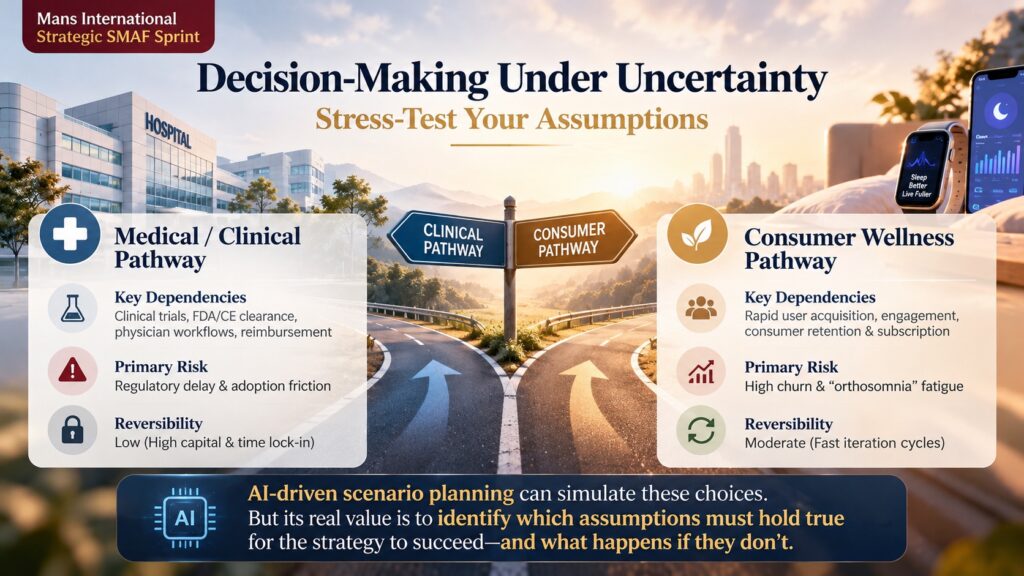
AI-driven scenario planning can simulate these choices. But its real value is to identify which assumptions must hold true for the strategy to succeed—and what happens if they don’t.
- Reversible decisions can be tested quickly in market micro-experiments.
- Irreversible decisions—such as multi-year clinical trials or complex reimbursement submissions—demand an unshakeable chain of evidence before capital is deployed.
For venture and growth investors, this distinction is paramount. A founder who transparently presents the fragile assumptions behind their model demonstrates far greater executive judgment than one who presents a flawless forecast built on unvalidated premises.
AI expands analytical capacity. It cannot assume accountability for capital allocation.
03 | Why Strategic Diagnosis Must Precede AI Scenario Planning
In advisory engagements across North America, Europe, and Asia, one rule holds true:
Technology readiness and commercial readiness are not the same thing.
A company may possess proprietary algorithms, strong pilot engagement, and a compelling technical roadmap while lacking the operational foundations for scalable, repeatable commercial growth.
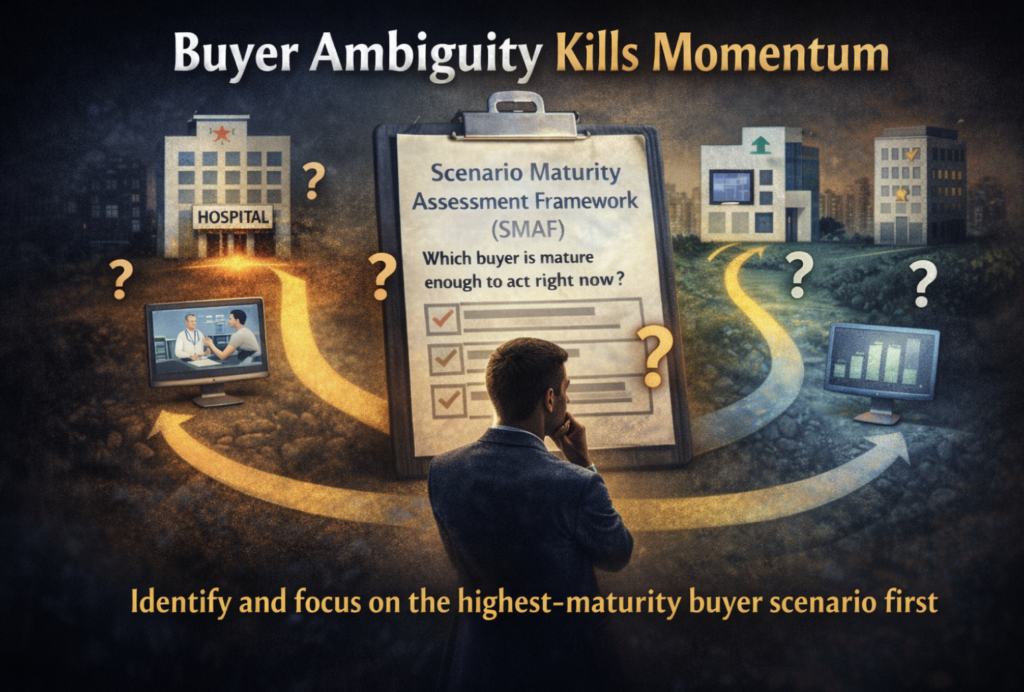
This is why we position the Strategic SMAF Diagnostic prior to broader strategic advisory at Mans International.
The Scenario Maturity Assessment Framework (SMAF™) evaluates whether a technology venture is truly prepared for its target commercial, clinical, and regulatory environment.
Rather than applying a generic checklist, the diagnostic isolates the specific uncertainties, blind spots, and commercialization risks that could compromise your next major milestone.
Without this baseline, sophisticated AI decision models simply make fragile assumptions look more persuasive.
Proving that a technology works in a trial is not the same as proving that a business can scale in the market.
A Final Question for Health Tech Leaders
Boss AI is not a substitute for executive judgment. It is a tool to challenge assumptions, stress-test evidence, and illuminate hidden risks.
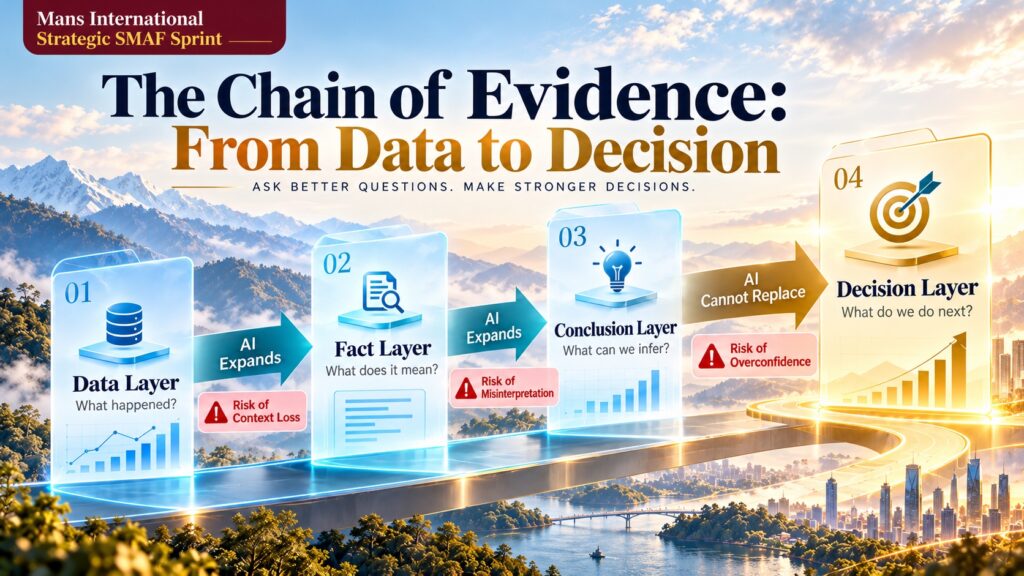
- For Founders: Before committing to your next growth round or commercial expansion, can you clearly separate demonstrated clinical/commercial value from assumptions about scalability?
- For Investors: When evaluating a digital health portfolio company, are you seeing evidence of sustainable market pull—or merely well-packaged engagement metrics?
The gap between these two outcomes determines whether your next capital deployment builds compounding enterprise value or funds an expensive misunderstanding.
Partner With Mans International
At Mans International, our Strategic SMAF Diagnostic helps technology founders, investment teams, and family offices examine strategic blind spots and commercialization risks before committing major capital.
If your organization is approaching a critical expansion, investment round, or enterprise AI decision, let’s discuss whether a tailored strategic diagnostic is right for you.
[ Book a 20-minute scoping call]
Connect. Share. Grow.
Mans International
Global Tech Strategy & Growth Advisory